Wednesday, April 24, 2013

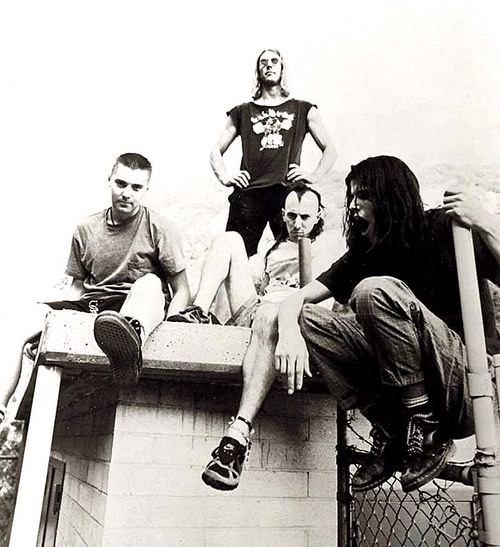
blink-182


Sound Familiar?
“Dammit,” “All the Small Things,” “What’s My Age Again?”

Who Are They?
Pop-punk hooligans with a middle school sense of humor (and later a penchant for writing semi-serious songs with Nightmare Before Christmas references).

Tom DeLonge and Mark Hoppus met in 1992 and began jamming and writing songs in Tom’s garage. The two recruited Scott Raynor on drums and began playing under the name Duck Tape. Mark’s girlfriend at the time hated how much time he was spending with the band and gave him an ultimatum: her or the band. So Mark left.

Shortly after Mark’s departure, Tom told him he was preparing to record a demo tape. Mark dumped his girlfriend and the trio recorded Flyswatter (a nice mix of original songs and punk covers) in Scott’s bedroom.

The band (known simply as Blink at this time) played its first shows in empty clubs, but its popularity gradually grew along with the ‘90s California punk scene.

(Fun fact: Tom would call up local high schools in order to score a gig. He told them Blink was a “motivational band with a strong anti-drug message.”)

Blink recorded a proper demo called Buddha in 1993, which got attention from Cargo Records. The band signed to the label and recorded its first album, Cheshire Cat, in 1994. Though the album wasn’t commercially successful, it helped Blink develop a much larger fan base.

Once Blink started gaining popularity, the trio had to change their name to avoid a dispute with an Irish techno band of the same name. So they randomly slapped “182” at the end. (Despite people’s attempts to give this a deeper meaning, “182” is just a random series of numbers. Proof.)

Tom, Mark and Scott embarked on their first national tour in 1995 with Unwritten Law, Sprung Monkey and 7 Seconds. During the tour, fellow California punks Pennywise flew Blink all the way out to Australia to tour with them. Pennywise guitarist Fletcher Dragge was pretty much a full-blown Blink fanboy, so he convinced Warped Tour founder Francisco Godinez to sign the band for the 1997 festival, saying, “They’re gonna be gigantic.”

After touring extensively, Blink went back to the studio to record Dude Ranch, which was released in 1997. Lead single “Dammit” received heavy airplay on Los Angeles radio station KROQ, and eventually made it on to rock radio playlists across the country.

Tensions between the trio mounted during the 1998 tour, and Scott was eventually fired. But Aquabats drummer Travis Barker came to save the day. He joined Blink full-time and followed Tom and Mark to the studio to record the group’s breakthrough album, Enema of the State.

The album, released in 1999, became a huge commercial success. Singles “All the Small Things,” “What’s My Age Again?” and “Adam’s Song” crossed over into Top 40 radio territory, resulting in Enema of the State selling over 15 million copies worldwide.

Where Are They Now?
Going strong after an “indefinite hiatus” and a mediocre comeback album (accompanied by a pretty awesome EP).

After the multi-platinum success of Enema of the State, Blink released Take Off Your Pants and Jacket in 2001. Songs like “The Rock Show” and “First Date” further fueled the band’s mainstream success. (Side note: The video for "First Date" has to be one of my favorite music videos of all time.)

During some much needed time off from the band, Tom started a side project called Box Car Racer and Travis hooked up with Rancid’s Tim Armstrong to form The Transplants. These side projects created a rift in the band, which possibly contributed to the darker follow-up to Take Off Your Pants and Jacket.

Blink’s eponymous fifth studio album was released in 2003 to generally positive critical reviews. Most critics praised the band for the more mature sound, but fans were split on the change.

The album’s second single, “I Miss You,” hit number one on the Billboard Modern Rock chart, and the accompanying video received heavy airplay on MTV and VH1.

But the success of blink-182 couldn’t diffuse the tension within the band. In 2005, Blink announced an “indefinite hiatus” and the trio went their separate ways for a few years.

Mark and Travis continued playing music together in the band +44 while Tom created Angels & Airwaves, a project that he called “the greatest rock and roll revolution for this generation.” (Tom later revealed that he was addicted to painkillers at the time, so his statement was bit ambitious.)

The three didn’t speak to each other until 2008 when Travis was involved in a grisly plane crash. That event brought the band back together, and plans for a reunion were under way.

Blink embarked on a North American reunion tour with Weezer and Fall Out Boy in 2009, and released Neighborhoods two years later.

But Why blink-182?
If you were as unimpressed with Neighborhoods as I was, you’ll be happy to know that Blink is back in the studio recording the follow-up.


What Does Sam Think?
It’s pretty obvious that I enjoy pop-punk. I think I’ve written about it enough for you to realize that. So let’s talk about the novelty of blink-182, shall we?

The band’s early albums (or at least the albums before 2003’s self-titled album) are brimming with toilet humor, three-chord riffs, and “I fucked your mom” jokes. Immature? Yes. Fun as hell to listen to? Absolutely.

I’d like to take this moment to compare Blink to Green Day. You saw it coming, so shut up.

These two bands are similar, yet very different in more ways than one. First of all, Blink has a more polished sound. That doesn’t make them a better band—it makes them more commercially appealing. But that’s definitely not a bad thing. I’m a fan of catchy pop-punk songs about prank calling your girlfriend’s mom.

Another major difference between Blink and Green Day is that Blink just took longer to mature. Now, I love Enema of the State, but when I heard that self-titled album, I was sold. Yes, I dedicated “I Miss You” to my boyfriend at the time, but the other songs are just so great. It’s a dark album, which is something I never thought I’d see from a band with a song about fucking a dog in the ass.

I do think Neighborhoods is a huge disappointment, though. I think even Tom said he wasn’t into it. But the Dogs Eating Dogs EP is pretty rad. If Blink can just summon the magic of that self-titled album again, they’ll have another great record.

But I’m all for musical growth. This is a band that has surprised me before, so I don’t doubt that they can do it again. They’ve gotten through the awkward reunion party, so now it’s time for the real comeback.


-- Sam Boyer, reporting from the ‘90s.

Wednesday, April 17, 2013

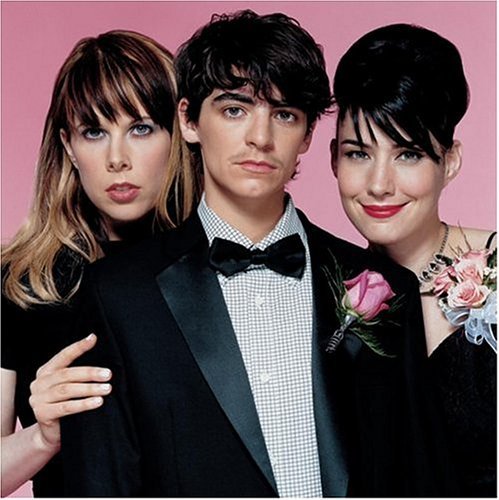
Bikini Kill


Sound Familiar?
“Rebel Girl”

Who Are They?
The frontrunners of the riot grrrl scene and symbols of third wave feminism.

Kathleen Hanna was introduced to feminism early on after her mother took her to a rally in Washington D.C. to see Gloria Steinem. Her interest grew when her mom checked out a copy of Betty Friedan’s The Feminine Mystique from the library. But the Hanna women had to keep their involvement with the women’s rights movement a secret from Kathleen’s father, who disapproved of such ideas (Kathleen’s parents later divorced).

Once Kathleen went off to college to study photography, she began working as a stripper to support herself. While at school, she worked with a fellow photography student to set up an exhibit that dealt with sexism and AIDS. The school administrators didn’t dig it, so they shut it down, which prompted Kathleen to create her own feminist art gallery with friends Heidi Arbogast and Tammy Rae Carland. The three eventually formed a band called Amy Carter.

In addition to fronting Amy Carter, Kathleen began doing spoken word performances that addressed sexism and violence against women. She later abandoned spoken word in favor of music. After touring with her new band Viva Knievel for a bit, Kathleen met punk zinester Tobi Vail. Kathleen and Tobi, along with guitarist Billy Karen and bassist Kathi Wilcox, formed Bikini Kill in 1990.

(Fun fact: Bikini Kill was originally the name of a band fronted by fellow riot grrrl musician Lois Maffeo. The name was inspired by the 1967 B-movie The Million Eyes of Sumuru. Tobi adopted the name for the band once Lois settled on a different name.)

Bikini Kill independently released a demo cassette called Revolution Girl Style Now! in 1991, followed by a self-titled EP in 1992 (released via the indie label Kill Rock Stars and produced by Minor Threat/Fugazi front man Ian MacKaye).

The band released its debut album, Pussy Whipped, in 1993 and began touring the UK with fellow riot grrrl rockers Huggy Bear.

(Fun fact: Bikini Kill’s most/only popular song, “Rebel Girl,” was produced by Joan Jett.)

By 1994, the riot grrrl movement was getting some intense media exposure, which was both a good and bad thing. On one hand, Bikini Kill’s message was being broadcast to a much wider audience. But on the other hand, that same message was being subverted by the Spice Girls and co-opted by the female artists of Lilith Fair. Kathleen called for a “media blackout” amongst riot grrrls on the basis that the movement was being misrepresented.

Bikini Kill released its final album, Reject All American, in 1996 and broke up a year later.

Where Are They Now?
Still broken up, but all members are still active in music and politics.

Once Bikini Kill called it quits, Kathleen, Tobi, Kathi and Billy all went their separate ways, all of which involved music.

Tobi played with Spider and the Webs and The Old Haunts, among other bands. Kathi joined the Casual Dots and Billy played in Ghost Mom. But it was Kathleen who found the most success.

After adopting the pseudonym Julie Ruin, Kathleen released a solo album in 1997. The project expanded past the album, resulting in a brand new band called Le Tigre.

Le Tigre mixed the politics of riot grrrl music with electronic and lo-fi beats, which was a pretty interesting combo. The band released three albums: Le Tigre in 1999, Feminist Sweepstakes in 2001 and This Island in 2004. This Island was the only album released on a major label.

In 2007, Le Tigre went on a hiatus and each member went on to pursue other things.

(Fun fact: Le Tigre most recently worked with Christina Aguilera on her album Bionic. The band co-wrote and produced the song “My Girls.”)

After her adventures with Le Tigre, Kathleen volunteered as a band coach for The Willie Mae Rock Camp for Girls, taught an art class at NYU’s grad school and married Adam Horovitz, a.k.a. Ad-Rock of the Beastie Boys.

In 2010, Kathleen announced that she would be turning her solo act Julie Ruin into an actual band, The Julie Ruin, with former Bikini Kill bandmate Kathi Wilcox.

But Why Bikini Kill?
The band isn’t getting back together anytime soon, but there’s a new documentary out about Kathleen called The Punk Singer. Plus, there’s always hope for some new Le Tigre material.


What Does Sam Think?
I didn’t get into riot grrrl music until I got to college (the only exception being Hole, but I’ve always considered them more of a grunge band). I took a women’s and gender studies class my freshman year and we spent a few classes talking about third wave feminism and the riot grrrl movement. I was instantly intrigued.

I had heard of Bikini Kill through my obsession with Nirvana (since Kathleen came up with the name for “Smells Like Teen Spirit” by writing “Kurt Smells Like Teen Spirit” on Kurt Cobain’s wall). That was back when I started listening to bands that I knew were huge influences for Nirvana because I was a weird kid and part of me wanted to be a female version of Kurt Cobain.

So I listened to “Rebel Girl” and loved it, but didn’t really delve into Bikini Kill’s discography until later on. When I finally gave the rest of their songs a chance, I fell in love. Everything was so brutal and angry and just true. And Kathleen has a voice that makes any guy’s dick crawl back up inside him (and I mean that as a compliment).

So yes, Bikini Kill is a feminist band with feminist lyrics and politics, but that really shouldn’t scare anyone away. I could write a whole rant about how silly it that feminism is considered a “bad word,” but I’ll save that for another time. Bikini Kill songs deal with real issues and real anger at those issues, including violence against women and sexuality.

My favorite Bikini Kill song, "I Like Fucking," is about, you guessed it, sex. But it dares to ask the question, “Why shouldn’t I be able to enjoy sex?” It’s empowering, as are most BK songs. The line, “I believe in the radical possibilities of pleasure, babe” really sticks with me.

Bikini Kill is raw, like most punk bands before them. This is music that lives in the moment and has something to say. I really wish every girl could listen to riot grrrl bands like this and feel empowered, but I know they’re not everyone’s cup of tea. Even if you don’t like the music, you have to appreciate the message.

And even though Kathleen Hanna can be a bit of hypocrite sometimes, I still like what she does (but maybe not everything she says outside of her music).


-- Sam Boyer, reporting from the ‘90s.

Wednesday, April 10, 2013

The Cardigans


Sound Familiar?
"Lovefool," "My Favourite Game"

Who Are They?

Swedish indie pop sweethearts with a hit sweet enough to make you forget about that whole suicide thing in Romeo + Juilet.

Guitarist Peter Svensson and bassist Magnus Sveningsson were really into heavy metal back in the day, but once they met up with drummer Bengt Lagerberg, keyboardist Lars-Olof Johansson and singer Nina Persson, they turned to pop music.

The Cardigans recorded a demo tape (with Nina only providing vocals on one track) and eventually got signed to a Swedish label to release their debut album, Emmerdale, in 1994. The album was only released in Sweden and Japan (rereleased internationally in 1997), but it scored the band its first radio hit, “Rise & Shine.”

Most of 1994 was spent touring Europe and recording the follow-up, 1995’s Life, which was released worldwide. The album became a huge success (particularly in Japan) and The Cardigans signed to Mercury Records.

A year later, the band released First Band on the Moon, which included their biggest hit to date, “Lovefool.” The song was literally everywhere, even in movies where it probably didn’t belong, like Romeo + Juliet and Cruel Intentions. (Okay, Romeo + Juliet I get, but Cruel Intentions? Really?)

(Fun fact: The Cardigans played themselves on the graduation episode of Beverly Hills, 90210.)

After more touring, The Cardigans released Gran Turismo in 1998. The (arguably better) album was a sharp contrast to the bubbly pop sensibilities of First Band on the Moon and spawned another minor hit, “My Favourite Game.”

(Fun fact: The video for “My Favourite Game” sparked a bit of controversy. It depicts singer Nina Persson joyriding in a car on the highway, causing multiple accidents and eventually killing herself. Director Jonas Åkerlund made five different endings, only one of which made it to air.)

Where Are They Now?
Recently reunited and playing various international festivals.

The Cardigans went on a short hiatus in 2000. Nina released a solo album under the name A Camp, Peter and Bengt worked on a project called Paus and Magnus recorded music under the name Righteous Boy.

But they couldn’t stay apart for long. The band reconvened in 2002 to release Long Gone Before Daylight, a noticeably darker album with an American country influence. (Nina actually dyed her hair from blonde to jet black at this time, supposedly to reflect the album’s sound.)

The Cardigans toured with Liz Phair, Katy Rose and Charlotte Martin in 2004 on the Chicks With Attitude tour, and ultimately released Super Extra Gravity a year later.

The band went on an even longer hiatus in 2007, during which Nina lent her vocal talents to a Manic Street Preachers album.

Last year (2012), The Cardigans reunited once again to play the Summer Sonic Rock Festival in Tokyo and Osaka.

But Why The Cardigans?
While there doesn’t seem to be any new material in the works, the band is still together. And Nina Persson still writes music, so I guess anything can happen.


What Does Sam Think?
Let’s just be honest here—The Cardigans aren’t anything special. That doesn’t make them a bad band—it just makes them decidedly mediocre.

“Lovefool” is a pretty catchy tune, though. I remember back when I was an angsty teenager and I had a crush on some boy who had no idea I existed, I put this song on repeat and choked, “Love me, love me / SAY THAT YOU LOVE ME” through cartoonish sobs. But I’m sure everyone did that at some point (please say you did). It’s cute and a little dark at the same time, which was perfect for my tortured teenage soul.

Now, if you like happy-go-lucky indie pop music, you’ll probably like the rest of First Band on the Moon. It’s a little too sweet for me, and Nina’s voice kind of got on my nerves a bit.

But Gran Turismo is a totally different animal—it’s dark, moody and brimming with cold, meticulous electronic sounds. They’re no Nine Inch Nails on this record, but it’s a welcome relief from the “sun-shines-out-of-your-ass” sounds of First Band on the Moon. (But again, if you dig that, there’s really no harm in it.)

“My Favourite Game” is a great song (complete with a pretty gnarly video), and I kind of wish it got more exposure than “Lovefool.” The Cardigans have proved that they can move past bubbly pop songs, but they’re still not the kind of band that melts your brain with creativity and originality. Then again, that’s the fate of most ‘90s pop bands (especially one-hit-wonders).

But that doesn’t mean you can’t dedicate “Lovefool” to that special someone (to annoy the shit out of them).


-- Sam Boyer, reporting from the ‘90s.
Wednesday, April 3, 2013

The Presidents of the United States of America


Sound Familiar?
“Lump,” “Peaches”

Who Are They?
Alternative weirdoes responsible for a song about a juicy fruit.

Formed in late 1993 in Seattle, The Presidents of the United States of America (hereon referred to as The Presidents because I’m lazy) got off to a quick start. They self-released a 10-song cassette called Froggystyle in December 1993 and signed to Seattle label PopLlama Records in 1994.

(Fun fact: Vocalist/bassist Chris Ballew actually plays a basitar, which is a six-string guitar with two bass strings. Guitarist Dave Dederer plays a guitbass, which has three guitar strings.)

The Presidents released their self-titled debut in 1995 and found massive mainstream success. Their biggest hit, “Peaches,” peaked at number eight on the US Billboard Hot Modern Rock Tracks chart (and is also known as the only song about peaches to break the top 10).

(Fun fact: “Peaches” is about a girl Chris had a crush on. He wrote the song after sitting under a peach tree she had in her yard while he waited for her to come home so he could finally tell her how he felt. Oddly sweet and stalker-ish.)

Amid a whirlwind tour and an appearance on MADtv in 1996, “Weird Al” Yankovic decided to release of parody of The Presidents’ song “Lump” called "Gump." You know you’ve made it when Weird Al parodies you.

The Presidents released the follow-up, II, in 1996. It peaked at number 31 on the Billboard 200 chart, but it wasn’t anywhere near as successful as the debut.

The band broke up in 1998 so Chris could spend more time with his family. The Presidents’ last release of the ‘90s was 1998’s Pure Frosting, which included new songs, covers and demos.

(Fun fact: A few songs from Pure Frosting appeared in TV shows and movies. "Man (Opposable Thumb)" was included in the Nickelodeon masterpiece Good Burger, a cover of “Video Killed the Radio Star” appeared on the soundtrack for The Wedding Singer and "Cleveland Rocks" ended up being the theme song for The Drew Carey Show.)

Although The Presidents didn’t release an album of new material until 2000, they collaborated with other artists, including Japanese band Shonen Knife and booty connoisseur Sir Mix-A-Lot. (Yes, the collab with Sir Mix-A-Lot is a real thing. The project was called Subset. Here’s proof. And it’s actually pretty rad.)

Where Are They Now?
Doing what ‘90s bands do best: performing at festivals.

The Presidents reunited in 2000 with a new single, “Jupiter.” The single actually became pretty popular, so the band released a brand new record, Freaked Out & Small, later that year. Critics loved it, but the album only sold 25,000 copies.

The band broke up again only to reunite again in 2004 to release Love Everybody. Dave Dederer left shortly after the album’s release and was replaced by Andrew McKeag, who played on the band’s most recent album, 2008’s These Are the Good Times People.

(Fun fact: The Presidents released a tribute song in 2011 at the Nintendo World launch event for Pokémon Black and White called "Can't Stop (Catchin' 'Em All)." I’m not sure if this is a major accomplishment or a major mistake.)

The Presidents have played various halftime football shows (no Super Bowl appearances, though) and plenty of festivals, but they haven’t had a single chart since 1998’s “Video Killed the Radio Star.”

But Why The Presidents of the United States of America?
The band will be performing at the Hop Farm Festival in the UK alongside My Bloody Valentine, Dinosaur Jr. and others. So if you can make it to Kent by July 5, be sure to catch their set!


What Does Sam Think?
My first introduction to The Presidents was probably during my sophomore year in high school. I was on my way to Disney World for my school’s traditional choir/orchestra trip, and when our Greyhound bus reached the Georgia state line in the wee hours of the morning, I put on “Peaches” in celebration.

That story really had nothing to do with my opinion of this band, but it’s a fun memory. So there.

Anyway, The Presidents are a fairly unique band in terms of instrumentation. I believe they’re the only band to use basitars and guitbasses, which really gives them a signature sound. I always wondered why their songs sounded so weird, and now I know. Also, if you’re a guitar geek and want to know more about these instruments, check out this GeoCities-esque website for more info.

The songs are a bit nonsensical, but they’re just so damn catchy. I’m just going to continue to praise “Peaches” here. I used to be obsessed with this song back in the day. I think it turned into an inside joke with one of my friends. We probably thought we were too cool because we listened to The Presidents. Or something like that.

I’d really like to see these guys put out a new album soon. I know they still make music, even in the form of questionable Pokémon songs. They still tour, for God’s sake. Unfortunately, they’ll probably always be billed as ‘90s nostalgia act. I’m just waiting for the day when they join the Summerland tour with Everclear.

Actually, that would be pretty rad. I’d pay to see that. You hear that, Presidents? I won’t think any less of you if you join Summerland. We’ll get drunk and sing “Peaches” together (because that’s what ‘90s bands do with their fans, right?).


-- Sam Boyer, reporting from the ‘90s.

Wednesday, March 27, 2013

Tool


Sound Familiar?
“Sober,” “Prison Sex,” “Stinkfist”

Who Are They?
Progressive metal titans widely considered to be the “thinking person’s metal band.”

In the ‘80s, the members of what would later become Tool were on very different paths. Guitarist Adam Jones and original bassist Paul D’Amour were looking to enter the film industry while Maynard James Keenan was remodeling pet stores in Michigan. Maynard and Adam met through a mutual friend in 1989, and after being thoroughly impressed by Maynard’s singing voice, Adam proposed they start a band together.

(Fun fact: According to Maynard, the name Tool means this: “Tool is exactly what is sounds like: It’s a big dick. It’s a wrench. We are […] your tool; use us as a catalyst in your process of finding out whatever it is you need to find out, or whatever it is you’re trying to achieve.”)

After playing a few shows in Los Angeles and being signed to label Zoo Entertainment, Tool released its first EP, Opiate, in 1992. The band has since claimed that Opiate included the six “hardest sounding” songs they had written up to that point.

The video for single "Hush" was actually a statement against the PMRC and its advocacy of music censorship. It was basically a big “fuck you” to Tipper Gore and friends in the form of Tool performing naked with Parental Advisory signs over their naughty bits.

(Fun fact: The band only appears in two videos: “Hush” and “Sober.” Though “Sober” is largely a stop motion animation video, you can see brief flashes of the band at the very beginning.)

The band’s first full-length album, Undertow, was released in 1993 to critical acclaim. Appearances at Lollapalooza boosted Tool’s success, and “Sober” became a hit single (due in part to the incredible stop motion music video).

Undertow’s second single, “Prison Sex,” ran into a bit of trouble. The song’s lyrics and video (also stop motion) dealt with the tough subject of child abuse, which sparked a healthy amount of controversy. MTV deemed the video too graphic (which is silly since it’s largely metaphoric) and pulled it from rotation.

The band’s second album, Ænima, dropped in 1996 and propelled Tool to the head of the alternative metal scene in the ‘90s.

(Fun fact: Ænima was dedicated to comedian Bill Hicks because Maynard and company felt that Tool and Hicks were “resonating similar concepts.” The song “Third Eye” includes a clip of one of Bill’s performances.)

Where Are They Now?
On the verge of releasing a new album, even though Maynard helms two other side projects.

At the tail end of promotion and touring for Ænima, Maynard joined the band A Perfect Circle, which was founded by Tool guitar tech Billy Howerdel. A Perfect Circle was more of an alternative rock venture than a progressive metal one, and found mainstream success with 2000’s Mer de Noms.

Meanwhile, Tool began recording Lateralus, which was released in 2001. Despite its complexity and art rock vibe, the album debuted at number one on the Billboard 200 chart. "Schism," which has since become Tool’s signature song (along with “Sober”), won the Grammy for Best Metal Performance in 2002.

At the end of the Lateralus tour, Maynard went back to A Perfect Circle to release Thirteenth Step. This prompted fans to believe that Tool was on hiatus.

(Fun fact: On April 1, 2005, the offical Tool site announced that “Maynard has found Jesus” and would no longer be recording with Tool. MTV’s Kurt Loder contacted Maynard for confirmation, but only received a response simply stating, “Heh heh.” It was, in fact, an April Fool’s joke.)

Tool’s fourth studio album, 10,000 Days, was released in 2006 to mixed reviews. After extensive touring, the band took a break and Maynard started yet another side project called Puscifer, which he considers his “creative subconscious.” Puscifer released two studio albums (2007’s “V” Is for Vagina and 2011’s Conditions of My Parole) and toured a large part of the US.

But Why Tool?
Drummer Danny Carey just confirmed that the new album is over halfway finished and may possibly be released this year!


What Does Sam Think?
Tool isn’t your average metal band. Actually, Tool isn’t your average prog metal band either. When I hear “progressive metal,” I think of Dream Theater or Isis. Tool doesn’t sound anything like either of those bands. (But if you seriously want to know more about metal as a whole, check out Justin Silk’s blog. He’s more of an expert than I am.)

This band sounds like one big experiment, except the solution is always the same—no matter what dangerous chemical you throw into the mix, the result will always be perfectly stable.

Once Maynard and friends released two prog metal albums, they decided to change things up with Lateralus. That album has a lot of art rock influence, especially on “Schism.” But does it sound chaotic? No. Does it sound boring? Not a chance. It’s still a metal album, but it’s only heavy in the right places.

Take “Parabol” and “Parabola” for example (these two songs are meant to be heard in immediate succession). “Parabol” is a really delicate track. It sets the scene for “Parabola,” which is much heavier. But “Parabola” actually ends with a droning guitar riff that almost echoes the tranquility of “Parabol.” They kind of answer each other. I know that sounds way too complicated for a metal song, but that’s what Tool is all about.

And you can’t talk about Tool without mentioning the music videos. If you’ve never seen a Tool video before, stop what you’re doing and watch one. I’ve got links to them all over this post, so there’s no excuse not to check one out (and don’t let the lengths scare you away). Yeah, they’re pretty surreal and at times a little frightening, but they’re some of the coolest videos I’ve ever seen. And I always find some meaning in them (but perhaps not the band’s intended meaning).

My favorite video is probably "Parabola," followed closely by “Prison Sex.” The imagery in “Prison Sex” is a bit easier to grasp since we already know it’s about child abuse. “Parabola” is a little tougher to explain, so I’ll just let you explore that yourself.

But if Tool isn’t your cup of tea, you have two other Maynard Keenan side projects to choose from. If you like modern rock with an art rock edge, give A Perfect Circle a try—it’s the more accessible project, in my opinion.

If you want to get weird, try Puscifer. That project is a nice mix of ambient, post-industrial, trip-hop and comedy rock. Not as chaotic as you’d think, though. (Also, I just really want to share this cover of “Bohemian Rhapsody” with you.)


-- Sam Boyer, reporting from the ‘90s.

Wednesday, March 20, 2013

The Prodigy


Sound Familiar?
“Voodoo People,” “Firestarter,” “Smack My Bitch Up”

Who Are They?
One of the most popular electronic acts of the ‘90s (and one of the most controversial). Also, this is Smells Like the ‘90s’ first electronic music entry—so get your rave on, folks.

In the beginning, The Prodigy was just another UK rave band. Liam Howlett recruited Keith Flint and Leeroy Thornhill to perform with him at clubs. After hearing Liam’s demo mix, Keith and Leeroy were in for the long haul.

The band’s first single, 1991’s “Charly,” became a huge hit in the UK rave scene, and even climbed to number 3 on the UK Singles Chart. Critics didn’t really get it, but do critics really ever get rave music?

(Fun fact: “Charly” is actually a reference to cocaine. The song samples a public information film called “Charly Says,” which resulted in critics identifying The Prodigy as “kiddie rave” or “Toytown Techno.”)

The Prodigy’s first full-length album, 1992’s Experience, made critics do a double take. With this release, the band was already beginning to distance itself from the “kiddie rave” label and move on to more seriously electronic territory. This new territory was later dubbed big beat, which is a style of electronic music characterized by heavy breakbeats and synthesizer-generated loops.

The band’s first foray into big beat was 1994’s Music for the Jilted Generation. The album was nominated for a Mercury Music Prize, but Liam didn’t let that get to his head. He refused to let his band appear on Top of the Pops in the UK, but as the videos for “Voodoo People” and “No Good (Start the Dance)” began receiving heavy airplay on MTV Europe, our heroes softened up to the idea of mainstream success.

“Firestarter,” the first single from 1997’s The Fat of the Land, helped The Prodigy break into the US and other overseas markets, and even earned the band a headlining spot at Lollapalooza. The Fat of the Land cemented The Prodigy as one of the most internationally successful electronic music acts, but also came with its share of controversy.

The album’s third single, “Smack My Bitch Up,” became the target of women’s rights groups due its lyrical content (the only lyrics in the song are “Change my pitch up, smack my bitch up”). The National Organization for Women claimed the song was a “dangerous and offensive message advocating violence against women” (from the 1997 LA Times article "Time Warner Again Faces the Music Over Song Lyrics"). The band, on the other hand, maintained that the repeated phrase in the track simply meant “doing anything intensely, like being on stage.”

If you thought the song was offensive, then boy, are you in for a treat when you watch the music video. Widely considered to be the most controversial video in MTV history, “Smack My Bitch Up” was a first-person chronicle of an intense night out at the clubs, complete with explicit drug use, graphic nudity and abuse of both men and women. Despite the twist ending (which I will not reveal here for those who haven’t seen the video), feminist groups blasted the video for its fierce misogyny and “Smack My Bitch Up” was eventually banned from television.

After massive demand, MTV finally began airing the video again, but only showed it after midnight. You can view the full, unedited version here, but you’ll have to verify your age since it’s age-restricted. (Side note: I don’t find it that offensive, but I definitely wouldn’t let your grandma watch it.)

(Fun fact: During a performance at the 1998 Reading Festival, the Beastie Boys requested that The Prodigy not play “Smack My Bitch Up,” to which vocalist/beatboxer Maxim replied, “They didn’t want us to play this fucking tune. But the way things go, I do what the fuck I want.” The song went on to win Best Dance Video and Best Breakthrough Video at the MTV VMAs the same year.)

Leeroy left the band at its commercial peak in 1999, and The Prodigy went on a brief hiatus.

Where Are They Now?
Still playing huge festivals and recording new material.

The Prodigy reunited in 2002 and released the single “Baby’s Got a Temper” to critical disappointment. Once again, the single was accompanied by a controversial video. This one featured topless women suggestively milking cows. No, I’m not kidding (this video is also age-restricted, by the way). The lyrics also included references to the date rape drug Rohypnol, so The Prodigy was just asking for this to get banned.

The band released two more albums (2004’s Always Outnumbered, Never Outgunned and 2008’s Invaders Must Die) and embarked on a whirlwind tour, which included stops at festivals like Przystanek Woodstock and Download Festival.

(Fun fact: Dave Grohl played drums on the Invaders Must Die track “Run with the Wolves.”)

In May 2012, The Prodigy announced the working title of its next album: How to Steal a Jet Fighter. As of 2013, the album has yet to be released.

But Why The Prodigy?
The band debuted a few new tracks at various festivals last year, so How to Steal a Jet Fighter is a real thing. No idea when it will be released, but it should be soon.


What Does Sam Think?
I don’t mean to sound like a music elitist or anything, but I started listening to The Prodigy at a young age (probably too young, now that I think about it). The Fat of the Land was one of the CDs my mom would play in her car all the time, along with The Crystal Method’s Vegas and Massive Attack’s Mezzanine. My mom is apparently a raver in disguise (proved by her trip to a Crystal Method show that turned out to be a rave).

Anyway, I grew up listening to a lot of different kinds of music, so when I got older, I never really understood why a lot of my friends had no idea what I was talking about when I mentioned The Prodigy. I just assumed everyone listened to them. I mean, didn’t every kid grow up hearing “Smack My Bitch Up” on the way to the pool in the summer? No? Perhaps this explains a lot.

I can’t say that I’m an expert on electronic music—I just know what I like. After researching the bands I heard in my mom’s car, I realized most of them had one thing in common: they were all big beat electronic bands. So if you like The Prodigy, you will most likely also dig The Crystal Method, Fatboy Slim and The Chemical Brothers (I know I mentioned Massive Attack earlier, but that’s considered trip-hop).

The Prodigy just has great beats. If you ignore the controversy for a second, you can definitely see the appeal here. The Fat of the Land in particular is some heavy stuff. It’s not like the electronic music you hear today. Yeah, this band started out as a rave band, but these guys weren’t afraid to experiment later on. Of course electronic music gets a little repetitive, but I could listen to The Prodigy forever.


-- Sam Boyer, reporting from the ‘90s.

Wednesday, March 13, 2013

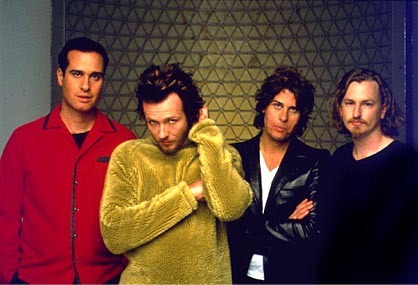
Stone Temple Pilots


Sound Familiar?
“Plush,” “Interstate Love Song,” “Trippin’ on a Hole in a Paper Heart”

Who Are They?
Alternative radio mainstays and supposed grunge imposters.

As with most of the history of Stone Temple Pilots, there are two sides to the story of how Scott Weiland and bassist Robert DeLeo met: the band’s side and Scott’s side. The band said that Scott and Robert met at a Black Flag concert in 1986. The two began discussing their girlfriends, only to find out that they were dating the same woman. Instead of beating the shit out of each other in a jealous rage, the two developed a bond and decided to start a rock band (they broke it off with the girl shortly after).

Scott’s side of the story (as detailed in his autobiography, Not Dead and Not For Sale) was that he and his high school friend, Corey Hicock, pursued Robert after seeing him play live.

Personally, I prefer the band’s story (but I still love you, Mr. Weiland).

Scott, Robert, Corey and a drummer named David Allin formed a band called Swing, but after Corey and David ditched them, they grabbed drummer Eric Kretz and guitarist Dean DeLeo (Robert’s older brother). Dean flat out refused to be in a band called Swing, so the name changed to Mighty Joe Young.

The band recorded a demo tape in 1990 and played its first show supporting Henry Rollins. During the recording of the debut album, Scott and company got a call from a bluesman who claimed the name Mighty Joe Young.

In a scramble to find a new name, the band threw around various spins on the initials STP (inspired by the STP Motor Oil stickers). After briefly considering the name Shirley Temple’s Pussy, they settled on Stone Temple Pilots (thank God for that).

Stone Temple Pilots signed to Atlantic Records in 1992 and released their debut album, Core, the same year. Core was a huge success, but most critics accused the band of being “grunge imitators.”

Critics may have hated them, but STP still gained a loyal fan base. The band toured extensively with Rage Against the Machine and Megadeth and filmed an episode of MTV Unplugged.

(Fun fact: In a January 1994 Rolling Stone poll, STP was voted Best New Band by readers and Worst New Band by the magazine’s critics. Talk about discrepancy.)

Despite the critical backlash, STP won a Grammy for Best Hard Rock Performance for “Plush” and released the hugely popular Purple in 1994.

“Interstate Love Song” became the album’s biggest hit, topping the Mainstream Rock Tracks chart for 15 weeks.

Meanwhile, Scott was developing a serious heroin addiction. By the time STP’s third album, 1996’s Tiny Music…Songs from the Vatican Gift Shop, dropped, most of the tour had to be canceled due to Scott’s drug abuse. As a result, Tiny Music fell off the charts and STP’s popularity began to wane.

The band went on hiatus soon after the album’s release. During this time, Scott released a solo album (12 Bar Blues) and the rest of the band teamed up with Ten Inch Men front man Dave Coutts to perform as Talk Show.

STP regrouped in 1998 to record No. 4, released a year later.

Where Are They Now?
Still technically together, sans Scott Weiland (maybe?). We’ll get into that later.

STP’s success came roaring back with a little help from No. 4’s biggest single (and my favorite song), “Sour Girl.” (I highly recommend watching the super strange and oddly sexy music video.)

In 2001, the band released Shangri-La Dee Da, which ended up being a commercial disappointment. After an altercation between Scott and Dean on the final show of the Shangri-La Dee Da tour, Stone Temple Pilots officially disbanded.

Scott joined the ultra-cool supergroup Velvet Revolver in 2003, which consisted of former Guns N’ Roses members Slash, Matt Sorum and Duff McKagan, along with former Wasted Youth guitarist Dave Kushner. Velvet Revolver released two albums, 2004’s Contraband and 2007’s Libertad, before Scott officially left the band in 2008.

Stone Temple Pilots eventually reunited in 2008 after Scott and the DeLeo brothers settled their differences. The reunion tour officially kicked off at Rock on the Range in Columbus, Ohio the same year (I unfortunately didn’t get to witness that miracle firsthand).

After the release of a self-titled sixth studio album, things began to go sour again. Hopes for a 20th anniversary celebration for Core were dashed in 2012, and Scott was already looking to reunite with Velvet Revolver (which Slash immediately declined).

But Why Stone Temple Pilots?
As of February 27, 2013, Scott Weiland is no longer part of the band. Or maybe he is. I’m not quite sure at this point. Scott recently told TMZ, “STP is not broken up. It’s a whole thing to try to boost ticket sales.” And apparently he learned of his termination through the band’s official website, not directly from any other members. So is this for real, or is it really just a marketing ploy? It may be one of the great mysteries of the world.


What Does Sam Think?
Story time! Back in middle school, I was obsessed with Velvet Revolver (and I also had an embarrassingly huge crush on Scott Weiland, but that’s beside the point). Through Velvet Revolver, I became interested in Stone Temple Pilots. I had heard “Interstate Love Song” and “Plush” before, but I didn’t think of delving into the band’s discography until the formation of VR.

I know some people dislike this band for a variety of reasons. Some say these guys are “grunge wannabes” since their debut came out a year after Nirvana, Soundgarden, Alice In Chains and Pearl Jam’s breakthrough albums. And although Core does have a grungy feel to it, STP evolved past it. There’s a vast difference between Core and Purple, and an even bigger difference between Purple and No. 4. The band kind of adapted a more psychedelic sound in later albums, with a pinch of Southern rock influence (especially on “Interstate Love Song”).

But most people I know who dislike STP cite Scott Weiland as the weak link. I know I’m biased when I say this, but Scott is incredibly talented, and I think people look past that talent and concentrate on Scott’s drug abuse. His drug and legal escapades should not define him as a musician. I’ve read his autobiography (and you should, too) and I’ve come to realize that he’s a pretty troubled guy. You really can’t hold that against him.

So if you don’t like STP (which is perfectly okay), I hope it’s because of the music and not the man behind it.


--Sam Boyer, reporting from the ‘90s