
30. Sixteen Stone by Bush (1994)
So, if you couldn’t tell already, a lot of my favorite
albums came out in 1994. This was the year of Kurt Cobain’s death and the
unofficial death of grunge. All other bands with a similar sound that came out
after Kurt’s passing are considered post-grunge (what an original name). Bush
was one of the first, and say what you will about the band’s later albums, but Sixteen Stone is flawless. If you don’t
listen to any other Bush albums, listen to this one. Gavin Rossdale and company
are from across the pond, but they ended up with not three, not four, but FIVE
successful singles from just this album. You’ll probably recognize the songs
“Comedown,” “Everything Zen” and my personal favorite, “Glycerine.” Bush isn’t
the most creative band out there, but sometimes I like straightforward rock
songs, and Sixteen Stone has plenty
of those.
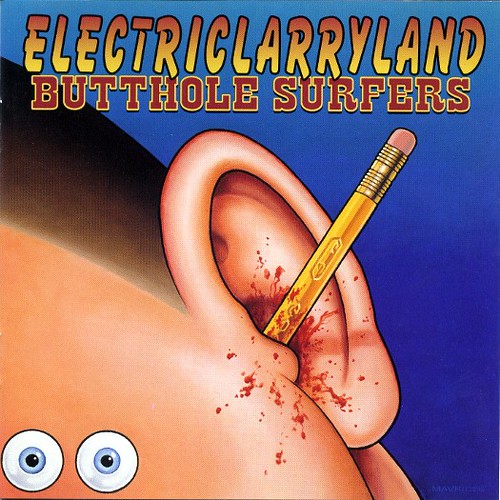
29. Electriclarryland by Butthole Surfers
(1996)
What can I say about Butthole Surfers? This band is strange
and unapologetic, but it scored a mainstream hit with a song that features the
line, “Then there was the ever-present football player rapist / They were all
in love with dyin’, they were doing it in Texas.” That was from possibly the
only Butthole Surfers song most people know, “Pepper.” The rest of Electriclarryland is a pretty bizarre
ride (though not nearly as bizarre as earlier albums), but it still packs a
punch. There’s something psychedelic about the whole album, like a 50-minute
acid trip. It’s honestly difficult to describe Butthole Surfers to someone who
isn’t familiar with their music. My only advice is to listen to Electriclarryland first, then work your
way up to something like Locust Abortion
Technician. Highlights include “Jingle of a Dog’s Collar,” “Cough Syrup”
and “The Lord is a Monkey.”

28. Goo by Sonic Youth (1990)
This was the first Sonic Youth album I ever listened to and
it quickly became one of my favorites. I was always aware that Sonic Youth was
an important band and basically required listening. During my huge Nirvana
phase back in 5th and 6th grade, I took Kurt Cobain’s
musical preferences as gospel and began to go through all his influences. That
list included PJ Harvey, the Melvins and of course, Sonic Youth. Goo is usually cited as the band’s best
album (probably next to Daydream Nation)
and the most accessible album thanks to singles like “Kool Thing” and “Dirty
Boots.” It’s noisy, gritty and just plain cool.
My favorite Sonic Youth song also appears on this album, even though Goo is only my second favorite album
from the band (that song is “Mote” if you’re interested).

27. Eleventeen by Daisy Chainsaw (1992)
I just recently got into this band and I’m still kicking
myself for not listening to Eleventeen earlier.
I first heard of Daisy Chainsaw on an episode of Roseanne (if you know me in real life, you know how much I love
that show). This was Darlene’s favorite band, and I love Darlene, so I had to
check it out. Eleventeen is the
definition of noise rock with one hell of a female singer. It’s the only Daisy
Chainsaw album to feature the flawless Katie Jane Garside on lead vocals, and
oh man, can she wail. Katie Jane has
one of the best screams I’ve ever heard. Add some heavy distortion and trippy
vocal effects and you’ve got one weird, raw album. It’s really too bad Daisy
Chainsaw broke up. I always seem to get into bands that have already
disappeared.

26. Odelay by Beck (1996)
Oh, Beck. You clever man. Yes, I went with the obvious
choice for best ‘90s Beck album, but Odelay
is incredible (and it proved that Beck wasn’t just a one hit wonder with
“Loser”). This was one of the many albums that I found in the CD traveler case
in my mom’s car and became obsessed with. Beck is cool without even trying,
especially on songs like “Devil’s Haircut” and “Sissyneck.” Even though he
samples a healthy mix of different songs, he makes everything his own. Take
“Where It’s At” for example—Beck samples five different songs, but the samples
are seamless. “Where It’s At” doesn’t sound like an amalgamation of five
different artists—it sounds like one really rad Beck song. This man is
incredibly talented and dares to be different, experimenting with hip-hop, noise
rock and folk music. Odelay is still
impressive almost a decade later.

25. Loveless by My Bloody Valentine (1991)
I tried to explain what shoegaze is to my mom one day, but I
found it impossible to give her a clear description, so I just played “Only Shallow”
from Loveless. I waited a while to
listen to My Bloody Valentine, possibly because I didn’t think I could handle
it. You have to be emotionally prepared for Loveless.
This album is pure fuzzy noise, but it’s beautiful.
Each song is a swirl of drum loops, hushed vocals and the sound of a million
guitars. When you hear the term “wall of sound,” it’s basically referring to
this album. The sound just hits you in the face and the swallows you whole. I
know quite a few people who can’t stand My Bloody Valentine, but they’re wrong
and we’re probably not friends anymore (kidding, but seriously, they’re wrong).
Loveless has influenced plenty of
bigger names, including Trent Reznor, The Cure and Radiohead. It’s a fuzzy
dreamscape that I don’t want to wake up from.

24. Pinkerton by Weezer (1996)
Remember when Weezer put out great albums? Pinkerton wasn’t a huge hit when it
first came out, but it has since gained cult status (and a perfect 10/10 rating
from Pitchfork). It’s dark, it’s abrasive and it has one of the best drunk
sing-a-long songs ever (“El Scorcho”). I’ll admit that I wasn’t a Weezer super
fan before I head this album. I was familiar with a few songs, most notably
“Buddy Holly” and “Hashpipe.” I listened to Pinkerton
for the first time over Christmas break a few years ago and I fell in love.
It’s a brutally honest album with some excellent musical moments. The heaviness
of a track like “Tired of Sex” meshes surprisingly well with the delicateness
of a track like “Butterfly.” Pinkerton is
one of those albums that seems to be accessible for everyone, even people who
otherwise dislike Weezer. Everyone finds common ground when they’re shouting,
“I think I’d be good for you / And you’d be good for me!”

23. Human Clay by Creed (1999)
I’m not even sorry for this one. You secretly made fun of me
for including Dave Matthews Band earlier in the countdown, but now you’re
probably considering leaving this blog for good for including Creed in a list
of great albums. If you read my previous entry on the band, you already know
that I used to be a Creed fanatic. Since this band was such a huge part of my
life growing up (though not so much anymore), I just had to include Human Clay.
Ignoring “With Arms Wide Open” for a second (because that song is probably the
worst one on this album), Human Clay is
a pretty strong rock record. “Are You Ready?” is a great opener, and even the
slower songs have intensity. Yes, Scott Stapp’s voice can get grating at times,
but he can still carry a tune. And yes, I still know the words to every song. Judge
me all you want.

22. Dummy by Portishead (1994)
Still with me after that last album? Yes? Good. Let’s talk
about Portishead. I grew up listening to a lot of ‘90s electronic music. I got
really into trip-hop for a while with Massive Attack’s Mezzanine (which you’ll see later in the countdown), and it was
around that time that I found Portishead. Beth Gibbons’ voice is absolutely
heavenly and the instrumentals are so sexy. I remember listening to this album
during a certain coming of age experience, so that might be why it appears so
high on this list. But aside from that, Dummy
is just a really chill record. This sounds silly, but I’ve written so much
poetry while listening to songs like “Mysterons” and “Pedestal.” The slower
tempos and trippy electronic effects are perfect for fueling creativity. And
“Strangers” remains one of my favorite songs of all time.

21. Frizzle Fry by Primus (1990)
If you know me at all, you know that I adore Primus. And
while this band has a fairly strong catalog, I’m going to have to go with Frizzle Fry as my absolute favorite
(though Tales from the Punchbowl is a
very close second). Frizzle Fry is
the first complete studio album from the band and it’s the perfect introduction
to the insanity that is Primus. I have a thing for heavy bass and this album is
ALL BASS. The first Primus song I ever heard was “Too Many Puppies” and it hits
me just as hard as the first time I heard it. Not only is Les Claypool a master
bassist, but Larry LaLonde is one of the most underrated guitarists of all
time. There’s some real skill on songs like “Pudding Time” and “The Toys Go
Winding Down” that you just can’t ignore. Frizzle
Fry as a whole is probably the heaviest funk metal album you’ll ever come
across. And if you ever get a chance to see Primus live (which I had the
pleasure of doing a few years ago), bring a helmet.


