What’s that? You want another
countdown? Well, your wish has been granted, dear readers. If you were a fan of
my Top 50 Favorite Albums of the ‘90s countdown, you’ll love my Top 24 Favorite
Music Videos of the ‘90s countdown!
I love music videos. I appreciate
the artistry of matching music with visuals, and the weirder the visuals, the
more I love the video. So get ready for some cinematic adventures, kids. Look
for part two next week. (Warning: Some of these videos are not safe to view at
work. I’ll label them to spare you the embarrassment.)
24. “This Is Hardcore” by Pulp (1998), dir. Doug Nichol
“This Is Hardcore” is a song about
pornography, so you would think the accompanying music video would reference
that. Well, you’re wrong. Pulp opted out of the obvious porn parody video and
instead produced a collection of dramatic film noir scenes that feel just as
seedy as a homemade porno. The characters are dark and empty, much like adult
film actors going through the motions.
23. “Tommy the Cat” by Primus (1991), dir. Mark Kohr
I had a hard time deciding which
Primus video would make this list. It was between this video and “Mr. Krinkle,”
but I ultimately went with “Tommy the Cat.” I think this video captures the
true essence of Primus. You’ve got hyper-sexualized cartoon cats, Monty Python
references and a special appearance by Tom Waits. And damn, that’s a funky bass line.
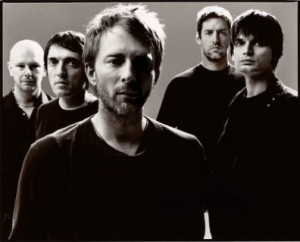
22. “Just” by Radiohead (1995), dir. Jamie Thraves
My music video preferences tend to
fall on opposite sides of the spectrum. On one hand, I love weird, extravagant
videos full of metaphors and symbolism. On the other hand, I really appreciate
simple videos with a strong hook. The hook in Radiohead’s “Just” is the mystery
of one person’s actions. A man lies on the sidewalk and refuses to explain why
he’s doing it until the very end. But we never hear his words.
21. “Everybody (Backstreet’s Back)” by Backstreet Boys (1997), dir.
Joseph Kahn
Most boy bands in the ‘90s tended
to make cheesy videos that mostly consisted of either synchronized dance breaks
or “come hither” bedroom eyes. I definitely have to give the Backstreet Boys
props for this extravagant ode to old horror films. Those pretty boys weren’t
afraid to get ugly for this video. Vampires and werewolves and mummies, oh my!
20. “Give It Away” by Red Hot Chili Peppers (1991), dir. Stéphane
Sednaoui
This video is a great introduction
to the Chili Peppers. It just shows Anthony Kiedis and company as a bunch of
funky, shirtless dudes who like to get weird. That is the RHCP philosophy in a
nutshell. Also, the camera work in this video is trippy as hell.
19. “Who Was in My Room Last Night?” by Butthole Surfers (1993), dir.
William Stobaugh
Butthole Surfers didn’t have a ton
of success with this song, but this video just screams ‘90s MTV. The Surfers
play in a creepy bar with even creepier characters buying drinks, but the
animated sequences are the really rad parts (those scenes were animated by RobZombie, so you know they’re badass). “Who Was in My Room Last Night?” is
basically a Saturday morning cartoon on acid with some live action shenanigans
thrown in.
18. “Three Little Pigs” by Green Jellÿ (1993), dir. Fred Stuhr
If you’re not familiar with Green Jellÿ (pronounced “green jello”), sit yourself down and watch the video for
“Three Little Pigs.” You will probably love it. Green Jellÿ is a comedy rock
band that promoted itself as “the world’s first video-only band.” “Three Little
Pigs” is part of the band’s video album, Cereal
Killer. The video is ultra cheesy claymation, directed by the guy
responsible for Tool’s “Sober” video. Unlike “Sober,” “Three Little Pigs” is
hilarious.
17. “Just a Girl” by No Doubt (1995), dir. Mark Kohr
Okay, so this is probably because I
have a huge girl crush on Gwen Stefani, but I’ve always loved the “Just a Girl”
video. It sets up a nice contrast between the “boy’s club” and the “girl’s
club.” Gwen is stuck in the girl’s room with the pretty pink walls and mirrors,
while the rest of her bandmates are jamming away in the boy’s room. The visuals
really complement the song here. And Gwen looks her best.
16. “Jeremy” by Pearl Jam (1992), dir. Mark Pellington
Most of the videos on this
countdown are fun videos, but I do appreciate a music video with a serious
message. “Jeremy” is powerful in its simplicity. We get a glimpse of the title
character’s story through newspaper clippings and brief flashes of his home
life and the final controversial scene in the classroom. The subject matter is
dark, but it’s handled so well on the screen.
15. “Prison Sex” by Tool (1994), dir. Adam Jones (NSFW)
Tool produces some of the most
thought-provoking music videos I’ve ever seen. Though most people tend to like
“Sober,” I prefer “Prison Sex.” Both videos use claymation, but the message
behind “Prison Sex” is much stronger. Though the visuals are mostly
metaphorical, the song itself is about the cycle of child abuse. In the video,
we see the larger, more menacing creature play around with the smaller creature
like a helpless doll, only to put it back on the shelf.
14. “Freak on a Leash” by Korn (1999), dir. Todd McFarlane
Say what you want about Korn, but
this video is badass. Using the same camera techniques as The Matrix, “Freak on a Leash” follows a bullet in slow motion as
it travels through various objects (and leaves them shattered). White boy,
nu-metal angst aside, the bullet trick in this video is beyond cool.
13. “Violet” by Hole (1994), dir. Mark Selinger & Fred Woodward




 Sound Familiar?