Wednesday, February 15, 2012

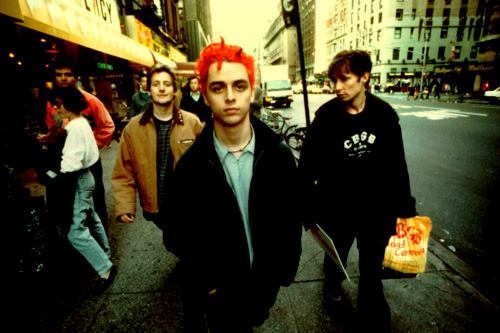
Green Day


Sound Familiar?

“Longview,” “When I Come Around,” “Good Riddance (Time of Your Life)”

Who Are They?

One of the bands responsible for reviving punk rock in the ‘90s (and can also be identified as this blogger’s favorite band).

Green Day began as Sweet Children, the project of long-time best friends Billie Joe Armstrong and Mike Dirnt, in 1987. With original drummer John Kiffmeyer (a.k.a. Al Sobrante) serving as the band’s manager, the boys were signed to Lookout! Records and recorded their first EP, 1,000 Hours, in 1989.

Before release of 1,000 Hours, Billie Joe and the gang decided to drop the name Sweet Children in favor of the name Green Day (a slang term for a day spent smoking weed).

Green Day’s first full-length album, 39/Smooth, was released on Lookout! in 1990 (re-released a year later as 1,039/Smoothed Out Slappy Hours, which included songs from previous EPs). After their first nationwide tour, John ditched the band to attend college. The Lookouts’ drummer Tré Cool stepped up as a temporary replacement, but it soon became clear that he was the one element Green Day had been missing.

Green Day’s underground success with 1992’s Kerplunk! attracted the attention of a slew of major labels, and the band eventually left Lookout! and signed with Reprise Records.

The decision to sign to a major label was met with a pretty intense backlash from the Easy Bay scene. Green Day were regarded as sellouts and were basically banned from local punk hotspot 924 Gilman Street.

But no matter. Major label debut Dookie dropped in 1994 and immediately made a splash with audiences and critics alike. Singles “Longview,” “Basket Case,” and “When I Come Around” all reached #1 on the Modern Rock Tracks chart. Holy commercial success, Batman!

Green Day also scored slots on both Lollapalooza and Woodstock ‘94’s lineups. (Woodstock ’94 was nicknamed “Mudstock” because of the band’s impromptu mud fight with the audience.)

After Dookie won the Grammy for Best Alternative Album in 1995, Green Day released its follow-up, the much darker and heavier Insomniac. Though not nearly as poppy as its predecessor, Insomniac still received high praise from critics.

Nimrod, an experimental deviation from the band’s standard pop-punk sound, was released in 1997. The album was comprised of a variety of musical styles, including surf rock, ska, and one acoustic ballad you may have heard of.

“Good Riddance (Time of Your Life)” became Nimrod’s defining single and was played during every high school graduation, television show finale, and wedding reception in the world (which is pretty hilarious considering that the song is basically a big “fuck you” to the East Bay kids who called them sellouts).

Where Are They Now?

Still relevant and considered one of the most successful ‘90s bands ever.

After the surprise success of Nimrod and “Good Riddance,” Green Day went back to the studio and make back with Warning in 2000. Warning was a step further in the direction Nimrod had barely touched upon. Comprised of mostly acoustic songs pertaining to faith, hope, and social commentary, the album confused fans and critics.

This resulted in a decline in popularity and a supporting spot on the 2002 Pop Disaster Tour with blink-182. (Imagine Green Day opening for blink-182 now. You can’t. You just can’t.)

Two compilation albums (International Superhits! and Shenanigans) followed Warning, and Green Day went back to the studio in 2003. After completing 20 tracks for the album tentatively titled Cigarettes and Valentines, the band’s master tapes were stolen from the studio and our heroes were forced to start from scratch.

In the meantime, a mysterious band called The Network was signed to Billie Joe’s label Adeline Records. After the release of the band’s only album, Money Money 2020, it was rumored that The Network was actually Green Day in disguise. Neither band confirmed this (though it’s pretty obvious that The Network is, in fact, Green Day wearing masks).

After much soul-searching and hard work, Green Day released the “punk rock opera” American Idiot in 2004. The album follows the life of a fictitious character referred to only as “Jesus of Suburbia.”

American Idiot won the Grammy for Best Rock Album and 34389473 other awards and is widely considered to be Green Day’s magnum opus (though we can’t forget about Dookie).

Following the hugely successful American Idiot was another side project (Foxboro Hut Tubs) and the Butch Vig-produced 21st Century Breakdown. (Reasons why I hate 21st Century Breakdown can be found in the “What Does Sam Think?” section below.)

Perhaps the most unusual achievement of the band is a Broadway musical version of American Idiot. In 2009, Green Day met with director Michael Mayer and many cast and crew members of the Tony Award-winning musical Spring Awakening to create a stage version of the album. Too ridiculous to work, right?

Wrong. American Idiot: The Musical was a smash hit on Broadway, much to everyone’s bewilderment. (Fun fact: Billie Joe appeared during the original Broadway run as St. Jimmy for a few shows. He was such a huge hit with audiences that they brought him back for a few more shows before the end of the musical’s Broadway run.)

But Why Green Day?

Billie Joe announced yesterday via Twitter that the band is back in the studio recording the follow-up to 21st Century Breakdown! Green Day debuted a few new songs at some secret shows in the past few months, but it hasn’t been confirmed that they’ll end up on the album.

What Does Sam Think?

I’ll try not to go full fangirl in this section, but you should still prepare yourself.

I’m well aware that not everyone likes Green Day, especially after American Idiot. I remember friends of mine calling them sellouts when “Boulevard of Broken Dreams” was released as a single. You do realize that they were “sellouts” long before American Idiot, right? The term “sellout” refers to a band that signs to a major label, which is what happened when Green Day released Dookie on Reprise back in 1994.

But I’m not going to try to sway your opinion of this band or bully you into listening to their music. What I will say is that Green Day is a band that really stands apart from all the other ‘90s-era pop-punk bands.

How do they manage to do that? Well, they’re not afraid to change up their sound, and they’re not afraid to grow up. They had a winning formula with Dookie, but just one album later, they took a different route. (Just a side note: Insomniac is probably the most underrated Green Day album. It’s pure punk. We can fight about it later.)

The maturity shift between Dookie and Nimrod is also pretty impressive. “Good Riddance” was such a huge step away from the band’s familiarly snotty sound, and the fact that fans went apeshit over it says a lot.

Warning was fairly risky, but I wouldn’t say that it’s Green Day worst album (though I did used to hate it).

To be honest, my favorite album is American Idiot simply because it was crazy enough to work. (It also came out at a pivotal time in my life, but I won’t get all nostalgic and misty-eyed here.) The maturity in both the instrumentation and lyrics is almost staggering. I thought to myself, “Is this really the same band that sang about getting high and masturbating all day?”

American Idiot is smart, robust, and has just the right amount of political undertones.

21st Century Breakdown, on the other hand, took the political aspect too far. It’s a little too preachy and takes itself way too seriously. If American Idiot was told from the point-of-view of the disillusioned youth in Middle America, then 21st Century Breakdown is a cantankerous old hippie’s ramblings about the “good ol’ days.” The album has a few redeeming songs (“Peacemaker,” “East Jesus Nowhere”), but it crumbles under its own weight.

From what I’ve heard so far, the new album has the potential to be a return to “old school” Green Day. Rolling Stone reported that the band is laying off the political commentary for this one.

Since the length of this entry is probably killing you, I’ll end with this: Even if you hate Green Day, you have to admit that they’ve got massive staying power and a pretty catchy sound to boot.

-- Sam Boyer, reporting from the ‘90s.

Wednesday, February 8, 2012

Mazzy Star


Sound Familiar?

“Fade Into You”

Who Are They?

Probably the coolest dream pop/ambient/shoegaze ‘90s band ever. (Who wouldn’t want that title?)

Mazzy Star began as Opal, the psychedelic revival project of guitarist David Roback and his then-girlfriend Kendra Smith. The band was deeply rooted in the Californian Paisley Underground movement in the early ‘80s (much like the movement associated with the Haight-Ashbury district in the ‘60s, minus all the acid).

Kendra ended up leaving Opal (probably due to a messy break-up with David, though there’s really no proof of that), and Hope Sandoval took her place as lead vocalist. Opal became Mazzy Star and the band’s first album, She Hangs Brightly, was released in 1990.

She Hangs Brightly failed to make splash with mainstream audiences (though it did pretty well on alternative rock radio). After a record label switch to Capitol, Mazzy Star released the follow-up, So Tonight That I Might See, in 1993. About a year after the album dropped, “Fade Into You” emerged as an unexpected hit single. It peaked at #44 on the Billboard Hot 100 and #3 on the Modern Rock Tracks chart.

Mazzy Star failed to produce another major hit after “Fade Into You.” Apparently, audiences just couldn’t appreciate good shoegaze back in the ‘90s. The band’s final album, 1996’s Among My Swan, was the least commercially successful release, though it did produce “Flowers In December,” Mazzy Star’s highest-peaking single in the UK.

After a five-month tour supporting Swan, Hope reportedly “begged” Capitol to terminate her contract. Thus, Mazzy Star was no more by the end of 1997.

Where Are They Now?

Back together with a new album in the works.

Immediately after Mazzy Star’s dissolution, Hope began collaborating with The Jesus and Mary Chain and The Chemical Brothers. David ended up producing a few songs on Beth Orton’s 1999 album Central Reservation.

In 2000, Mazzy Star reunited for a small tour and hinted at a new album in the near future. That hint was obviously a lie since the album is set to drop later this year. Instead, Hope joined up with Colm Ó Ciosóig (formerly of My Bloody Valentine) to form Hope Sandoval & The Warm Inventions. Their first album, 2001’s Bavarian Fruit Bread, generally impressed critics.

In October 2011, Hope and David released their first new single as Mazzy Star in 15 years, the double A-side “Common Burn”/”Lay Myself Down.”

But Why Mazzy Star?

Their fourth studio album (and first new album since 1996’s Among My Swan) will be released later this year. In the meantime, Mazzy Star will embark on a festival tour, making appearance at Coachella and Primavera Sound.

What Does Sam Think?

Mazzy Star is one of many ‘90s bands that fly under everyone’s radar. This is understandable considering their musical style. Not everyone’s going to dig their laid-back sound. A lot of people may find it boring.

But it’s far from boring, guys. It’s textured, soulful, and just plain gorgeous. I do think you have to be in the right mood to appreciate it, though. When you’re pre-gaming for a party, your first thought probably wouldn’t be anything along the lines of, “Oh man, I’m so juiced for this party. I need some Mazzy Star in my life right about now. Hey, bro! Put on “Fade Into You”! And turn that shit all the way up!”

If you know anyone who actually says this, let me know so I can give them my number.

Anyway, Mazzy Star is a band that taps into your subconscious. They’ve taken the elements of psychedelia and folk rock to a deeper level. They can’t really be directly compared to other bands, but their sound stems from a mixture of The Velvet Underground and The Byrds. Though many bands in the Paisley Underground movement attempted this combination or something similar, Mazzy Star one-upped the competition with Hope Sandoval.

I know I talk a lot about vocalists on this blog, but that’s because I really pay attention to vocals. Hope has a very folksy voice and she doesn’t play up her range very often. While this may be seen as a “lazy” vocal style, it suits the instrumentals.

If you’ve never given Mazzy Star a try, I’d recommend listening to So Tonight That I Might See in a bath of warm water in the dark with some scented candles. It’s great contemplative music. Bathe in Hope’s voice. All your troubles will melt away.

-- Sam Boyer, reporting from the ‘90s.

Wednesday, February 1, 2012

Garbage


Sound Familiar?

“Only Happy When It Rains,” “Stupid Girl,” “Special”

Who Are They?

A post-grunge tour de force featuring the “Nevermind Man” (a.k.a. Butch Vig) as a key member.

Butch and Duke Erikson had been a part of the music industry for years before the formation of Garbage. After producing Nirvana’s magnum opus (1991’s Nevermind), Butch sought to start on a new project, this time with a female vocalist.

One night, guitarist Steve Marker was killing time by watching a little MTV when he saw the video for Angelfish’s “Suffocate Me.” The band’s singer, Shirley Manson, immediately peaked his interest, so Steve invited her to join his band.

Angelfish disbanded, and after two auditions, Shirley became a permanent member of Garbage.

In an effort to avoid the grunge genre that had put Butch on the map, the band deliberately strove to make a pop record. After signing to Mushroom UK Records, Garbage released the first single, “Vow,” in 1995. Commercial alternative radio in the US picked up “Vow,” and it went into heavy rotation nationwide, debuting at #39 on Hot Modern Rock Tracks.

Garbage’s self-titled album debuted at #193 on the Billboard 200 in August 1995. Since Shirley and the gang signed with a UK record label (Shirley is Scottish), the album was received better across the pond upon its initial release.

“Queer” was released as a single in the UK, while “Only Happy When It Rains” became a single in North America. Once it was certified a “Buzz Clip” by MTV, “Only Happy When It Rains” gave Garbage that push into the mainstream in the US.

After a contribution to the Romeo + Juliet soundtrack (1996’s “#1 Crush”), Garbage received Grammy nods for Best New Artist, and Best Rock Song/Best Rock Performance for “Stupid Girl.” (They lost Best New Artist to LeAnn Rimes. Really?)

For their follow-up (1998’s Version 2.0), Garbage decided not to change their sound, as most bands feel obligated to do. Instead, they kept the same formula they had used for Garbage and pushed their sound as far as it would go. The first single was the aptly named “Push It.” Subsequent singles “I Think I’m Paranoid” and “Special” helped Version 2.0 earn two Grammy noms for Album of the Year and Best Rock Album.

Despite losing out on tons of Grammys, Garbage ended the ‘90s on top of the world. They had two successful albums and had hits in both the UK and the US, along with Italy, Latvia, Lithuania, Norway, Finland, Austria, and Germany. (I know every band dreams of being big in Lithuania. Don’t lie.)

Where Are They Now?

Back from the dead with their first new album in 7 years.

Garbage regrouped in 2001 to record their third album, Beautiful Garbage. After a short legal scuffle with their record label, the band signed to Interscope Records and released “Androgyny” as Beautiful Garbage’s first single.

The promotional schedule for the album was postponed due to the September 11 attacks, and Beautiful Garbage ended up suffering from this lack of promotion. It received mixed reactions from both critics and fans, but was somehow named one of Rolling Stone’s Top 10 Albums of the Year (not that Rolling Stone’s opinion on anything really matters.)

Garbage scored a supporting slot on U2’s Elevation Tour, but Butch ended up contracting Hepatitis A after the last North American show. Meanwhile, “Breaking Up the Girl” (not to be confused with the Red Hot Chili Peppers tune “Breaking the Girl”) was released as a single and eventually used as the theme song to the Daria TV movie Is It College Yet?.

The Beautiful Garbage tour was greatly hampered by the band’s health problems, with Shirley suffering from throat problems and poor Butch being taken off the tour twice (first with Hepatitis, then later with Bell’s Palsy).

Work on 2005’s Bleed Like Me was halted when Shirley underwent surgery on her right vocal cord. Due to rising tension and a breakdown in communication, Garbage slowly began to disintegrate. When Butch encountered eager fans dying to know how the album was going, he didn’t have the heart to tell them that the band was seriously considering a breakup. Instead, he name-dropped some possible titles for the album, which got him thinking that maybe Garbage wasn’t finished after all.

Bleed Like Me was a success, with lead single “Why Do You Love Me?” debuting at #39 on the Modern Rock Tracks chart. But the effort of producing the album proved to be too much for the band. At the end of an Australian tour, Garbage confirmed that they were going on an indefinite hiatus.

Shirley began work on a solo album (which was never released) and Butch produced Green Day’s Grammy-winning album 21st Century Breakdown. But the universe sensed this hiatus was too great a disturbance, so Garbage convened once again.

But Why Garbage?

The result of this happy reunion is Not Your Kind of People, the band’s first album in seven years. Not Your Kind of People is set to drop on May 15. No new single yet, but check out this interview with Shirley (and marvel at her lovely accent).


What Does Sam Think?

Post-grunge is dangerous territory. Why? Well, if you’re a post-grunge band, you run the risk of sounding similar to every other post-grunge band (Candlebox, Collective Soul, Oleander, Creed, etc.). Or if your name is Dave Grohl, you can become ridiculously successful. If you are not Dave Grohl, you better have that extra special something that sets you apart.

Garbage has that special something. They’re the perfect mix of post-grunge attitude and electronic infectiousness. Steve Marker said it best: “We take pop music and make it as horrible sounding as we can.”

The music isn’t horrible in the sense that it will make your ears bleed. The “horrible factor” comes from the unconventional pop sensibilities. You’ve got rough electronic elements mixed with Shirley’s sultry vocals, a combination that seems to please people in a post-Nirvana world.

Garbage’s sound is a little dark, a little girly, but all-around original. Garbage and Version 2.0 are great examples of this. Bleed Like Me is much darker than previous albums, but it really doesn’t stray too far from Garbage’s signature sound.

I expect great things from Not Your Kind of People, though I know having high expectations can end in devastation (see my continuous disappointment in new albums from ‘90s bands, with the exceptions of Radiohead and Primus).

But when you have Butch Vig as a permanent member, you’re only allowed to produce great albums. He’s Nevermind Man, capable of topping the charts in a single bound!


-- Sam Boyer, reporting from the ‘90s.

Wednesday, January 25, 2012

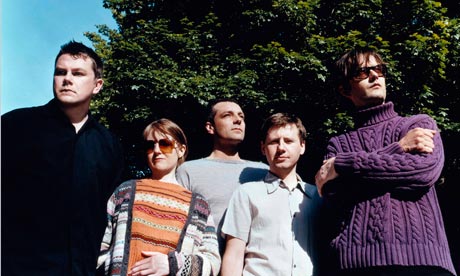
Pulp


Sound Familiar?

“Common People,” “Disco 2000,” “This Is Hardcore”

Who Are They?

The Britpop band that rode the waves made by Blur and Oasis, but was--in fact--the most original.

When you think of the Britpop explosion of the mid-‘90s, what are the first bands that come to mind? Oasis? Blur? Maybe even Suede?

Among all these one-name bands from across the pond, there was Pulp, making music way before the Gallagher brothers exchanged their first “fuck yous.” Formed in 1978, Pulp’s musical style mirrored the Sheffield sound (electronic New Wave, like The Human League). Their first album, It, was released in 1983 and largely consisted of romantic pop songs influenced by Leonard Cohen.

The album was a commercial failure, leading founder and vocalist Jarvis Cocker to throw a hissy fit and threaten to break up the band. After a handful of lineup changes, Pulp was signed to Fire Records in 1985. (Fun fact: Soon after signing to the label, Jarvis fell out of a window while trying to impress a girl with his Spider-Man impersonation. He had to use a wheelchair for a while, which he proudly performed in onstage.)

The next release (1987’s Freaks) failed to meet Jarvis’ standards, but bassist Steve Mackey, who joined the band in 1989, introduced Jarvis to the magical world of house music, pulling Pulp into a more dance-oriented direction.

The band left Fire Records and signed to Island Records, which proved to be a good move. Once His ‘n’ Hers dropped in 1994, Jarvis finally began experiencing the success he has so desperately craved since Day 1. Pulp ultimately had their first Top 40 hit with “Do You Remember the First Time?,” an ode to popping the cherry. (Fun fact: A short film was produced to promote the track. It consisted of a series of interviews with fans and celebrities describing their “first times.”)

Pulp’s success was due in part to the massive media interest in Britpop and the moderately huge single “Common People” from 1995’s magnum opus, Different Class. The album was pretty dark compared to (What’s the Story) Morning Glory? or even Parklife. Jarvis’ lyrics were highly sexualized, and the single “Sorted for E’s and Wizz” became a lightning rod for “pro-drugs” accusations.

Despite all the controversy (or maybe because of it), Different Class garnered immense critical praise and catapulted Pulp into their own little spotlight (I can’t say the spotlight because they were kind of overshadowed by all the other Britpop bands). (And another fun fact: At the 1996 BRIT Awards, Jarvis invaded the stage during Michael Jackson’s performance of “Earth Song” and “wiggled his backside” at the audience. Michael was pissed and Jarvis ended up spending the night in Kensington Police Station charged with actual bodily harm and assaulting the child performers. The charges were later dropped.)

After the circus that was the Different Class era, the band began to disintegrate. Jarvis developed a cocaine addiction and key member Russell Senior ditched the group. This Is Hardcore, released in 1998, mirrored the band’s real-life struggles, touching on even darker subject matter than its predecessor. (You don’t have a dirty mind for thinking the title track is a reference to porn. It really is.)

Where Are They Now?

Reemerging from a hiatus for a new tour!

Pulp released one last album (2001’s We Love Life) before calling it quits. To no one’s surprise, Jarvis became the most successful member after the breakup. He’s released a couple solo albums and the BBC is basically in love with him.

Jarvis also ventured into acting, lending his voice to Wes Anderson’s Fantastic Mr. Fox (as Petey) and playing the lead singer of The Weird Sisters in Harry Potter and the Goblet of Fire. How can you not love this man?

Bassist Steve Mackey has also been busy. He’s produced tracks for M.I.A. and Florence + The Machine.

Pulp reunited in 2010, playing various festivals in the UK and touring Europe and Australia in 2011. They co-headlined the Reading Festival and the Leeds Festival with The Strokes in August 2011.

But Why Pulp?

Though they’ve been back together and touring the UK for a couple years now, Pulp is making an appearance at this year’s Coachella Festival, the first show in the US in a decade.

What Does Sam Think?

Out of all the musical movements of the ‘90s, Britpop has always seemed the stalest to me. I like Blur, but I have a love-hate relationship with Oasis. (My love for Radiohead is irrelevant because they really had nothing to do with Britpop).

But Pulp kind of changed my mind. They played disco-influenced pop rock songs with ridiculously sexualized subject matter. My confession: I love disco. And sexy songs. I love sexy disco songs. No shame.

Pulp can definitely hold its own with a sound like that. Different Class is such a fun record, even if it does take a dark turn. Listening to “Common People” just brings a smile to my face. It’s like the disco version of “Wonderwall.” It makes you want to grab that boy/girl of your dreams and dance the night away (and maybe grind a little when no one is watching).

Their darker material (anything from This Is Hardcore) isn’t exactly party music, but it’s got a lot of soul. Jarvis’ demons drive the record, but Pulp’s signature sound isn’t lost at all. The darkness actually makes things more interesting. And writing a song about the porn industry also helps.

If you’ve never listened to Pulp before, you’re definitely missing out. Even if the mere mention of disco makes you cringe, give this band a chance. You may find yourself breaking out the platforms and spandex and having your own little “disco inferno.”

-- Sam Boyer, reporting from the ‘90s.

Wednesday, January 18, 2012

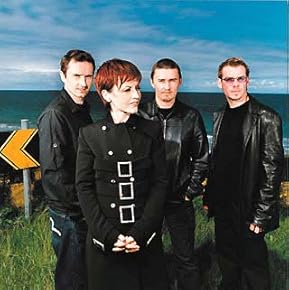
The Cranberries


Sound Familiar?

“Linger,” “Dreams,” “Zombie”

Who Are They?

Irish hit-makers who sold more albums than all of your favorite ‘90s bands combined.

Before the British invasion of the mid to late ‘90s (courtesy of bands like Oasis and Blur), a few guys from Ireland decided to start a band. In 1989, brothers Mike and Noel Hogan formed The Cranberry Saw Us, the first incarnation of the group we all know and love. In order to become The Cranberries, original singer Niall Quinn had to beat it to make room for Dolores O’Riordan.

The reason to hire Dolores? She auditioned with a rough version of a little song called “Linger.” Perhaps you’ve heard of it?

With a new singer and a new name (Dolores made the executive decision to switch to The Cranberries), the four-piece recorded a demo tape and made sure it spread all over the UK. Soon, they were signed to Island Records and released their debut album, Everybody Else Is Doing It, So Why Can’t We?, in 1993.

“Dreams,” the first single, was released a year prior to the album. Surprisingly, neither song nor album garnered much attention. It wasn’t until they started touring with Suede that The Cranberries caught the attention of MTV. The power MTV wielded in the ‘90s was pretty impressive (music television? Imagine that!), so once the video for the second single “Linger” was put into heavy rotation, everyone and their mother knew The Cranberries.

The airplay on MTV catapulted Everybody Else Is Doing It to #1 on the UK Album Chart and paved the way for the band’s second, more successful offering, No Need to Argue in 1994. How much more successful? Well, the album went triple platinum within a year and spawned the number one hit “Zombie.”

Unfortunately, the novelty of an obviously Irish band began to wear off after the release of To the Faithful Departed in 1996. Critics loved it, but audiences didn’t dig it as much. Faithful did manage to squeeze out one last number one hit for The Cranberries (“Salvation”), so it wasn’t a total waste.

By the time Bury the Hatchet was released in 1999, rumors of Dolores’ impending solo career began to swirl. Everyone knew that The Cranberries were nearing the end, but no one was willing to admit it.

Where Are They Now?

Reunited and it feels so good! (You wouldn’t believe how long I’ve wanted to use that reference in one of these entries).

Wake Up and Smell the Coffee (released in 2001) was the last gasping breath from our Irish heroes before their hiatus in 2003. The Cranberries finished up the biggest tour of their careers in July 2000 and went on to open for The Rolling Stones in 2003.

Even though they teased fans with new material during those early-2000s shows, the hiatus came before the release of a sixth studio album.

Dolores released her solo album Are You Listening? in 2007, while her bandmates started new projects (Mono Band and The Low Network, among others). The (inevitable) reunion occurred in January 2009 in celebration of Dolores becoming an Honorary Patron of University Philosophical Society (Trinity College, Dublin).

First came a North American/European tour and the continuous denial of a new album. Two years later: “Just kidding, guys. We were recording a new album the whole time.”

But Why The Cranberries?

That new album that they refused to tell us about is called Roses and it drops on Feb. 27. Mark your calendars, kids.

What Does Sam Think?

I’d like to make a confession: I love bands with heavy accents. Admit it, you do, too. If you can listen to “Zombie” without immediately falling in love with Dolores O’Riordan’s sultry Irish crooning, there must be something seriously wrong with you.

Accent fetish aside, I love The Cranberries. Everyone loves The Cranberries. Your mother probably loves The Cranberries. Seriously. Go ask her. She’ll start singing “Linger” and you’ll get uncomfortable and feel embarrassed for her.

There’s a reason why this band was so huge in the ‘90s. Yes, they had catchy tunes, but they also infused that marketable alternative sound with a little Celtic fire. Americans love European exports. Anything that doesn’t remind us of baseball and apple pie is on another level, man. (Sorry. The snark is heavy today.)

The Cranberries had what bands like Oasis and Blur had: mainstream appeal and foreign intrigue. They weren’t foreign in the sense that they spoke another language (they didn’t anyway). They were foreign to us because they weren’t part of the dominating “Seattle sound.” Everybody Else Is Doing It came out when grunge was still a thing, yet it crushed the competition. That’s impressive.

Aside from the foreign appeal, the band was just plain talented. Whenever I hear “Zombie” or “Linger,” I just feel like everything is going to be a-okay. Maybe it’s the nostalgia embedded in my soul, or maybe this snarky blogger actually has a heart. Either way, The Cranberries owned the ‘90s and they’ve got a fan in me.

-- Sam Boyer, reporting from the ‘90s.

Wednesday, January 11, 2012

Nada Surf


Sound Familiar?
“Popular”

Who Are They?

One of many one-hit-wonder bands of the late ‘90s, yet one of the few one-timers to stick with making music.

The year was 1992: a time when grunge is at the top of its game and Sir Mix-A-Lot graced the airwaves with his ode to the booty. Nada Surf was just a garage-rock dream shared by guitarist/vocalist Matthew Caws and bassist Daniel Lorca at that point. It wasn’t a serious venture for either of them until Ira Elliot (formerly of the Fuzztones) joined the party.

Upon becoming a trio, the boys scored a gig at the Knitting Factory and just happened to run into former Cars frontman (and Weezer producer) Ric Ocasek. They gave him their demo tape, thought they didn’t expect much more than a smile and an empty promise of, “Yeah, I’ll give it a listen.”

Three weeks later, Ric called and offered to produce the band’s first album. Believe it or not, that was bad timing for our heroes. Nada Surf had been finalizing a contract with Elektra Records at the time. Ultimately, negotiations with the record company didn’t pan out (probably due to some Ocasek witchcraft), so Ric connected the band with Maverick Records. The result was 1996’s High/Low, which yielded the first and most successful single “Popular.”

During the summer of 1996, Nada Surf toured the US with fellow one-hit-wonders Superdrag. Meanwhile, “Popular” was gaining momentum and ended up becoming a summer anthem. The band toured overseas and released a follow-up (The Proximity Effect) in Europe in 1998. When record execs couldn’t find a radio-friendly single on the album (and Nada Surf refused to write another “Popular”), the band got the boot.

Nada Surf spent the remainder of the decade struggling to get the rights over The Proximity Effect, which they finally won in 2000.


Where Are They Now?

Newly independent and jonesing for a comeback.

After being booted from their record label, Nada Surf took three-year break from music. Matthew, Daniel, and Ira took regular day jobs to pay the bills. In 2001, they got back together to record Let Go, produced by a couple close friends of the band and paid for in $1 and $5 bills. The single “Inside of Love” received decent airplay, but was nowhere near as successful as “Popular.”

Two studio albums later, Nada Surf seemed to all but disappear from the face of the earth. Until now.

But Why Nada Surf?

The ‘90s alterna-kids are releasing their seventh studio album, The Stars Are Indifferent to Astronomy, on Jan. 24. Check out the first single!


What Does Sam Think?

The ‘90s were riddled with one-hit-wonders like Nada Surf, especially in the latter half of the decade. Oddly enough, those random songs by artists you can never quite remember the names of are the ones that stick with you. Face it, people get way more nostalgic over “Baby Got Back” than any Radiohead tune.

Considering the importance of these songs, let’s dissect “Popular,” shall we?

The song begins with a group of girls gossiping about another girl “going steady” with some football player named Johnny. Through spoken-word verses, Matthew Caws gives us the lowdown on how to break up with someone in the most “high school” sense of the phrase.

There’s part 1 of the appeal. This is a song about high school relationships (with emphasis on cliques and popularity, hence the title). But it doesn’t glorify high school in any sense. It’s bitterly sarcastic. Just look at the these lines from the last verse:

I think if you’re ready to go out with Johnny
Now’s the time to tell him about your one month limit
He won’t mind, he’ll appreciate your fresh look on dating
And once you’ve dated someone else, you can date him again
I’m sure he’ll like it
Everyone will appreciate it
You’re so novel, what a good idea


This, my friends, is exactly what every ‘90s high school outcast was thinking. And it’s probably still relevant.

Part 2 of the appeal is the chorus. We go from spoken-word sarcasm to a catchy, Weezer-esque melody. This is just proof that not every one-hit-wonder has to be about a girl’s ass (though it does help).

Now about Nada Surf as a band. I applaud them for standing up against the big bad record company when they were being bullied into making another hit (You go, Nada Surf!). But now they just kind of fade into that generic alternative band category. They’re not bad, but they’re not spectacular. As silly as it seems, they’re missing that ‘90s angst, as evidenced in “Popular.”

I wouldn’t call myself a huge fan of Nada Surf, but it’s great to see a band continuing on in the music business, even without finding much mainstream success.


-- Sam Boyer, reporting from the '90s.

Tuesday, October 4, 2011

Neutral Milk Hotel


Sound Familiar?

“In the Aeroplane Over the Sea,” “Holland, 1945”

Who Are They?

The king of indie bands (and carrot flowers).

For most casual ‘90s enthusiasts (those who own the odd compilation album and are aware of the existence of Nirvana), the name Neutral Milk Hotel doesn’t ring a bell. Not recognizing the name isn’t a criminal offense. I’m not gonna go all Pitchfork on your ass and berate your taste in music just because you’ve never heard “In the Aeroplane Over the Sea.” What I will do is give you the lowdown on the magic created by Jeff Mangum.

In the early ‘90s, Jeff began experimenting with music in the band The Olivia Tremor Control, and later recorded some of his own stuff under the name Milk. Neutral Milk Hotel began as just a recording project for Jeff as he wandered the country jobless, homeless and the epitome of the phrase “starving artist.”

It wasn’t until after the release of Everything Is (a 4-song EP) and On Avery Island that NMH became a full-fledged band. Before that, it was just Jeff and some other guys who happened to be hanging around. Julian Koster, Scott Spillane, and Jeremy Barnes joined the party as permanent members and work on the follow-up to Avery Island began in 1996.

The masterpiece In the Aeroplane Over the Sea was released in 1998 to high praise from critics and almost no response from the public (everyone must have been too busy listening to “My Heart Will Go On” for the millionth time).

Aeroplane definitely stood out with its inventive instrumentation (I’m pretty sure NMH is one of the only bands to use a singing saw) and passionate (albeit confusing) lyrics. As the legend goes, Jeff’s inspiration for the album stemmed from reading The Diary of Anne Frank. Although he has never confirmed that Aeroplane is all about her, it’s still a pretty popular theory.

Not even a year after the album’s release, Jeff became disenchanted with the music business (a plague that seems to haunt most ‘90s artists) and the band went on an indefinite hiatus. In a decidedly Cobain-esque move, Jeff went into hiding, only reemerging for the odd private show.

Where Are They Now?

No longer a band, although Jeff keeps the memory alive.

While Jeff was in hiding, his bandmates started projects of their own. All three of them continue to release music under different names (Julian as The Music Tapes, Scott as The Gerbils, and Jeremy as A Hawk and a Hacksaw).

In 2005, In the Aeroplane Over the Sea was re-released by Domino Records and re-evaluated by critics. Pitchfork gave it an almost unheard of 10/10 rating. Can we just stop and take that in? That’s on par with Harry Potter riding a unicorn into Oz. This doesn’t happen every day, folks.

Jeff has become an infamous recluse for about a decade. He’s played a handful of private shows across the US, but no new recordings have surfaced.

But Why Neutral Milk Hotel?

Why, indeed? Well, Jeff Mangum is still alive. His latest appearance was at the All Tomorrow’s Parties Festival (yes, a festival) in the UK this past weekend. He also started a new website where he’s self-releasing a box set of Neutral Milk Hotel albums and unreleased tracks, but no new material as of right now.

Because the man is apparently an enigma (and cameras seem to be scarce at all his shows), I can only give you a taste of one of his live performances.


What Does Sam Think?

I’ll try my best to make this comprehensible (but I can’t make any promises).

I will admit that I have not been a Neutral Milk Hotel fan since the beginning. I had only heard the name mentioned by just about every music publication on the face of the earth. After some vigorous recommendations (or threats, rather) from friends, I finally gave this mysterious band a try.

And magic greeted my ears in the form of In the Aeroplane Over the Sea’s title track.

It’s very rare for me to immediately like a band upon first listen. It usually takes me a few tries to get into new music (see my love affair with Animal Colllective). However, NMH impressed me beyond reason.

So I’m sure you’re sitting here asking yourself, “What makes this band so damn special?” It’s difficult for me to give you a straight answer, so I’ll smash all my jumbled thoughts into this cliché expression: They’re so wrong, they’re right.

The distortion is almost oppressive, the horn section wavers in and out of tune, the lyrics make no sense, and Jeff’s voice leaves something to be desired. I don’t know if it’s sheer talent or just plain witchcraft, but all these seemingly atrocious qualities all work in the band’s favor.

If you forget everything you think you know about good music, you can hear the raw acoustics, the strange and subtle variation in instrumentation, and the pure emotions flowing from Jeff’s carefully constructed words.

I do acknowledge the fact that NMH isn’t for everyone. If you don’t like it, even after multiple attempts to like it, that doesn’t mean you have terrible taste in music. But once you “get” it, you’re hooked for life.

In the Aeroplane Over the Sea is a beautiful album (as is On Avery Island) and Jeff Mangum is truly an artist. And I’m not just saying that because I’m a Mangum fangirl (although that may be part of the reason).

Still not convinced this band belongs on “best of” lists all over the Internet? Consider this: without Jeff Mangum and Neutral Milk Hotel, you probably wouldn’t have Franz Ferdinand or Arcade Fire.


--Sam Boyer, reporting from the ‘90s.