Wednesday, February 27, 2013

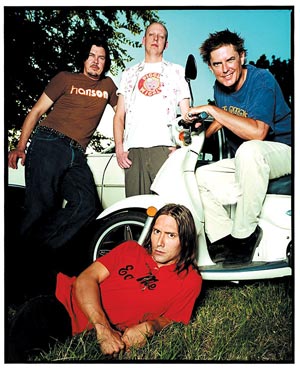
Butthole Surfers


Sound Familiar?     “Pepper,” “Who Was In My Room Last Night?”

Who Are They?
One huge, chaotic, darkly comic drug trip of a band. (Side note: this entry is going to be filled with ridiculous fun facts because this band is just too weird, but in a good way.)

Like Bad Religion, Butthole Surfers got their start in the late ‘70s/early ‘80s in the hardcore punk scene. (Yes, believe it or not, there was a hardcore punk scene in San Antonio, Texas.)

Oddballs Gibby Haynes and Paul Leary met in the ‘70s at Trinity University in San Antonio and bonded over their shared taste in non-mainstream music. Gibby landed a job at an accounting firm, while Paul stayed in college to work on his degree.

(Fun fact: Gibby and Paul published a magazine in 1981 called Strange V.D., which was basically a collection of abnormal medical disorder photos, complete with hilariously fictitious explanations for each one.)

After playing a few shows in San Antonio with the sibling rhythm section of Quinn and Scott Mathews, the band (not known as Butthole Surfers at this point) bought a van and headed to California. During a concert in San Francisco, Dead Kennedys frontman Jello Biafra became a fan of the band and invited them to open for his band.

(Fun fact: The band didn’t settle on the name Butthole Surfers until its first paid gig. Prior to that, they performed under various aliases, including the Vodka Family Winstons, Ashtray Babyheads, Ed Asner Is Gay and The Inalienable Right To Eat Fred Astaire’s Asshole.)

Jello soon offered them a chance to record an EP and release it through his record label, Alternative Tentacles. The Mathews brothers ditched the band following an altercation between Scott and Gibby, so bassist Bill Jolly and drummer King Coffey filled in.

The resulting EP, 1983’s Butthole Surfers (also known as Brown Reason to Live and Pee Pee the Sailor), was just a preview of the band’s albums to come.

(Fun fact: Butthole Surfers’ first EP became one of Kurt Cobain’s favorite albums. He actually met Courtney Love at a Butthole Surfers/L7 concert in 1991.)

After several dozen lineup changes (I’m not even going to bother listing all of them because there are just too many) and two fantastically strange albums (1984’s Psychic…Powerless…Another Man’s Sac and 1986’s Rembrandt Pussyhorse) the legend of Butthole Surfers began to grow. Their chaotic live shows attracted a plethora of weirdos and punk rockers alike, featuring everything from strobe lights and smoke machines to naked dancers and cross-dressing.

(Fun fact: At the end of the band’s first tour, the boys settled in a small town in Georgia, where they admitted to stalking members of R.E.M. They would leave a van parked in front of Michael Stipe’s house that had the message “Michael Stipe/Despite the Hype/I’d Love to Suck/Your Big Long Pipe” painted on the side.)

The Surfers returned to Texas in 1986 to record a follow-up to Rembrandt Pussyhorse, which resulted in their heaviest record to date, 1987’s Locust Abortion Technician. (This album is sometimes considered to be an early precursor of grunge, which makes sense since Kurt Cobain was such a huge Butthole Surfers fan.)

Hairway to Steven, released in 1988, was a delicate mix of the band’s experimental roots and the more accessible sound that would later give the Surfers mainstream success. After the release of piouhgd in 1991, Butthole Surfers shocked the world and signed to Capitol Records. They teamed up with bass legend John Paul Jones (of Led Zeppelin, if you have to ask) and released the much more mainstream Independent Worm Saloon in 1993.

The album gave them their first rock radio hit, “Who Was In My Room Last Night?” (complete with a bizarrely awesome music video).

After losing yet another band member, Gibby and Paul pursued side projects. Gibby’s side project, P, featured the musical talents of Johnny Depp, Bill Carter, Sal Jenco and Flea.

(Fun fact: P was the band playing at the Viper Room in Los Angeles the night River Phoenix died of a drug overdose.)

In 1996, the Surfers released their most successful album, Electriclarryland. The lead single, “Pepper,” became a Top 40 hit and propelled the album to number 31 on the Billboard 200 chart.

Despite the surge of popularity (and money), Butthole Surfers didn’t get along with their record label. The planned 1998 project After the Astronaut was scrapped and the band ditched its manager.

Where Are They Now?
Touring sporadically, but not in support of any new material.

The Surfers resolved their little tiff with Capitol Records and released Weird Revolution in 2001. The album included rerecorded After the Astronaut outtakes and another successful single, “The Shame of Life.”

Since the release of Weird Revolution, Butthole Surfers have toured intermittently, even making an appearance at the 2008 All Tomorrow’s Parties festival.

(Fun fact: All Tomorrow’s Parties founder and organizer Barry Hogan reportedly told The Village Voice that after watching Butthole Surfers’ performance, they would never play the festival again.)

The band’s last tour was in 2011 and only included 12 stops. Is this the end of Butthole Surfers?

But Why Butthole Surfers?
While it’s true that these guys haven’t done much in the last couple of years, there’s still a possibility that new material may turn up. Paul and King Coffey recently stated that the Surfers will tour again if they can pull off another album.


What Does Sam Think?
I always pair Butthole Surfers with Primus, and I think that’s because they’re both really strange bands. But if we’re really having a strange contest here, the Surfers out-weird Primus every time.

First of all, if the only Butthole Surfers song you know is “Pepper,” you’re in for a treat if you choose to listen to the rest of their discography. And by “treat,” I mean a bad acid trip.

If you’re not a fan of psychedelic, glitchy sound splices, steer clear of the band’s first few albums. Locust Abortion Technician makes a little more sense (and sounds a bit closer to metal than anything), but a first-time listener should always start with Electriclarryland.

So what makes this band so weird (and why is that a good thing)? Well, the Surfers incorporate a lot of different elements into their music. They experiment with psychedelia, noise rock, punk rock and a touch of electronica, as well as a healthy dose of sound manipulation and tape editing. There are noises on their albums that you will never hear anywhere else.

This is some really underground stuff, guys. I understand that it’s not everyone’s cup of tea, but you have to respect the experimentation. There really aren’t any other bands that sound like Butthole Surfers at the moment. I mean, some of their songs sound like pure chaos, but others sound like fairly accessible (though slightly off-kilter) alternative tracks.

It honestly surprises me that this band reached the mainstream. “Pepper” may be a pretty tame track by Surfers standards, but it’s still a little weird to hear on the radio. With lyrics like “Flipper died a natural death, he caught a nasty virus / And then there was the ever-present football player rapist,” how did this song become so popular? But I guess that was after Nirvana had paved the way for alternative bands to get a little weirder on the radio.

But if you do dig all the crazy shit this band puts out, hit me up and we’ll get weird, Locust Abortion Technician style.


-- Sam Boyer, reporting from the ‘90s.

Wednesday, February 20, 2013

Bad Religion


Sound Familiar?
“American Jesus,” “21st Century (Digital Boy),” “Infected”

Who Are They?
Los Angeles punks with a penchant for socially conscious lyrics and gorgeous three-part harmonies.

Bad Religion was formed in 1979 by high school chums Greg Graffin, Jay Bentley, Jay Ziskrout and Brett Gurewitz. (This makes the LA punks the oldest band associated with the ‘90s punk revival, along with Social Distortion.) Speaking of Social D, Greg Graffin and company played their first show with those legends in a warehouse in 1980.

After releasing its debut, 1982’s How Could Hell Be Any Worse?, Bad Religion lost the first of many members. Drummer Jay Ziskrout quit and was replaced by Peter Finestone.

The band’s second album, 1983’s Into the Unknown, was more trouble than it was worth. Almost all copies of the album were sold out of a warehouse without the band’s permission. As a result, Into the Unknown went out of print and Bad Religion decided to call it quits.

Obviously, that little hiatus didn’t last long. Greg reassembled Bad Religion with Circle Jerks guitarist Greg Hetson (Brett Gurewitz was in rehab at the time). Brett was eventually persuaded to return and the band released Suffer in 1988.

The next three albums (No Control, Against the Grain and Generator) received high praise and led to Bad Religion being regarded as one of the best hardcore punk bands of the time, despite the lack of mainstream success. (So if you were wondering why I’m writing about a band formed in 1979 on a strictly ‘90s blog, it’s because these guys didn’t hit the mainstream until 1993/1994.)

In 1993, Bad Religion did what most punk bands did during the great period of alternative commercialization: they signed to a major label (Atlantic Records, to be precise). Bad Religion’s seventh studio album, Recipe for Hate, reached a much wider audience and spawned a few major rock radio hits.

The follow-up, 1994’s Stranger Than Fiction, became the band’s most successful album with help from hit singles “Infected” and “21st Century (Digital Boy).” (Flashback: 1994 was a surprisingly great year for music. Grunge had died with Kurt Cobain, but good ol’ fashioned punk rock got a comeback. See Green Day’s Dookie, The Offspring’s Smash and countless others.)

Unfortunately, Bad Religion was met with backlash from both fans and Brett Gurewitz, who had left the band shortly before the release of Stranger Than Fiction. Similar to the shit Green Day got for Dookie, Bad Religion was accused of “selling out” for leaving the indie label Epitaph. (For my thoughts on the ridiculous concept of “selling out,” see my entry on Liz Phair.)

Things got a little ugly between Greg and Brett following the whole sellout business. During some concerts, Greg would change the words to “Stranger Than Fiction” to “I want to know where Brett gets his crack.” This was kind of a low blow considering that Brett had struggled with crack and heroin addictions for years.

After Bad Religion released two more albums to mixed reviews, Greg and Brett finally set aside their differences and started writing together again.

Where Are They Now?
Still rocking that punk attitude (with most of the original lineup).

Instead of sticking it out with the major label, Bad Religion returned to Epitaph Records in 2001. Brett officially rejoined the band and work began on the next few albums.

The Process of Belief (2002) and The Empire Strikes First (2004) were welcome returns to the band’s pre-Atlantic Records sound.

In 2007, Bad Religion released New Maps of Hell to surprising commercial success. The album reached number 35 on the Billboard 200 chart thanks to killer singles and a slot on Warped Tour.

The band celebrated its 30th anniversary in 2009 with a 30-day tour of 30-minute sets (is it just me, or is a 30-minute set just not long enough?), and released The Dissent of Man a year later.

But Why Bad Religion?
The band just released its 16th (!) studio album, True North to widely positive reviews. It also managed to reach number 18 on the Billboard 200 chart, making it the highest charting Bad Religion album ever. Not bad, not bad.


What Does Sam Think?
I think we’ve established that I have a thing for ‘90s punk bands. I know when you saw the title of this entry, you probably rolled your eyes and thought, “Here we go again. And she’s probably going to somehow tie Green Day into all of this.”

Okay, so, you know me too well. Big deal. I really dig punk rock in all its forms. And I understand why some people don’t like it. As I’ve probably said countless times before, this section of the entry isn’t going to consist of me criticizing your taste in music because you don’t like the band I mentioned. But I do hope you take my opinion into consideration and at least give any band you’re not familiar with a try. (End speech.)

So what’s up with Bad Religion? This band often gets crammed into the same category as Green Day (okay, that’s slightly debatable) and The Offspring, but Greg Graffin and company don’t quite fit. Sure, they signed to a major label and had some commercial success, but even their most accessible album feels a little off the radar.

If you want to pair Bad Religion with any band, it would have to be Social Distortion. Both bands have a consistent “roots” style of punk rock that appears to be untainted by mainstream success. It’s almost pure in a way. Most of the bands after them adhered to the pop-punk sound, which is way more radio-friendly.

But I guess Bad Religion does have a radio-friendly vibe. That’s mostly due to those amazing three-part harmonies. Listen to any Bad Religion song and you’ll hear an angelic punk rock choir behind Greg’s gruff vocals. It’s refreshing, especially if you’re not really into punk.

Is Bad Religion the only “true” punk band making music today? No. If you look hard enough, you’ll find some really rad bands keeping the scene alive. But now you’re probably wondering how to tell the difference between a “true” punk band and a “fake” one.

“What’s punk, Sam? How do we measure punk? Who really started it and who killed it?”

The answer, my friends, lies here.


-- Sam Boyer, reporting from the ‘90s.

Wednesday, February 13, 2013

Liz Phair


Sound Familiar?
“Never Said,” “Supernova,” “Whip-Smart”

Who Is She?
Super cool indie rock queen turned pop rock princess.

Liz Phair started out as an artist in San Francisco—a starving artist, that is. After she was unsuccessful in San Franciso, Liz moved to Chicago (close to where she grew up) and supported herself by selling charcoal drawings on the streets of Wicker Park.

She joined the alternative music scene in Chicago by recording demo tapes under the name Girly Sound, and eventually became friends with the bands Material Issue and Urge Overkill. Liz also befriended record producer Brad Wood, which was pretty smart on her part.

Liz asked Brad what the coolest indie label was, but the answer was fairly obvious, so she called up Gerard Cosloy over at Matador Records. Gerard listened to the Girly Sound tapes and immediately fell in love. Liz began rerecording her demos and added some new tracks, resulting in 1993’s Exile in Guyville.

(Fun fact: Exile in Guyville was meant to be a song-by-song reply to The Rolling Stones’ 1972 album Exile on Main Street. Critics didn’t really see the connection, but couldn’t deny that Liz’s album was the bee’s knees.)

Critics and audiences alike drooled over Liz’s debut, praising her blunt, honest lyrics. But not everyone really got what Liz was all about. Leading the revolt against Ms. Phair was Steve Albini (better known as the audio engineer behind such ‘90s staples as Nirvana’s In Utero and PJ Harvey’s Rid of Me).

In response to an article praising Liz (and several other artists) as an “explicit rejection of much of insularity that increasingly characterizes underground music,” Steve called Liz a "pandering slut" and claimed she was “more talked about than heard, a persona completely unrooted in substance, and a fucking chore to listen to.” Harsh, Steve. Very harsh.

But that didn’t stop Liz. Her second album, 1994’s Whip-Smart, received an overload of media attention and the first single, “Supernova,” became a Top 10 modern rock hit. Unfortunately, Whip-Smart received mixed reviews and didn’t sell nearly as well as Exile in Guyville.

Liz’s third album, 1998’s Whitechocolatespaceegg, marked a drastic shift in maturity in the singer. The album reflected some of the ways marriage and motherhood had affected her (she got married in 1995 and had a son a year later).

Promotion for Whitechocolatespaceegg included extensive touring with the Lilith Fair lineup and fellow chick rocker Alanis Morissette.

Where Is She Now?
Swimming in the mainstream (and getting a lot of shit for it).

Working on her fourth studio album proved to be a huge pain in the ass. When Liz had initially finished the album and sent it off to her new label (Capitol Records) for approval, the label slammed it and told her to work with another producer to make a better (more commercial) record.

So Liz worked with the production team known as The Matrix (the masterminds behind Britney Spears and Avril Lavigne) and came up with four bubblegum pop songs. The album, Liz Phair, was released in 2003 to scathing reviews.

How scathing were the reviews, you ask? Well, critics from just about every publication (including The New York Times) accused Liz of “selling out” and committing an “embarrassing form of career suicide.”

Singles “Why Can’t I?” and “Extraordinary” did end up becoming Top 40 hits in North America, but that didn’t really help Liz’s indie cred.

Somebody’s Miracle, released in 2005, was a return to a more traditional rock sound, but it was ultimately unsuccessful.

In 2008, Liz signed with ATO Records, rereleased Exile in Guyville and began composing music for TV dramas. Two years later, she leaked a new album, Funstyle, on her official website and basically admitted that the record was an experiment.

After Funstyle, Liz left ATO Records and toured to promote the album.

But Why Liz Phair?
In addition to reviewing books for a living, Liz is currently working on a new album and a novel!


What Does Sam Think?
Liz gets a lot of shit and she doesn’t deserve it. Before I wrote this entry, I had no idea how much critics hated her self-titled album. Sure, it has some poppy tunes, but what’s wrong with that?

I believe I’ve talked about how totally pointless I think the term “selling out” is before (think back to my Green Day entry). Does it really matter that much to you if an independent artist signs to a major label? If you like the music, who cares about the politics?

Before I go on full on rant mode here, let’s just talk about Liz’s body of work.

Exile in Guyville is a great album. It’s smart, blunt and little feisty. Did Liz single-handedly save music with it? No, but it’s still an important record. The Chicago music scene in the ‘90s was very much male-dominated (Urge Overkill, Smashing Pumpkins), so (good) female solo artists were hard to come by.

What makes Liz stand out is not her lo-fi sound, but her low-key voice. She kind of sings in a monotone, but somehow that’s not as boring as you’d think. It makes her sound detached, which makes her fit perfectly into the decade that celebrated apathy and a “whatever” attitude.

And her lyrics. Oh, her lyrics. Liz likes to explore her sexuality through her lyrics (sometimes explicitly). Take these lines from “Flower” for example: “Every time I see your face / I think of things unpure and unchaste / I want to fuck you like a dog / I’ll take you home and make you like it.” Beautiful, no?

Even her poppy songs have some sexy undertones. Here’s a line from the all-too-popular “Why Can’t I?”: “Here we go, we’re at the beginning / We haven’t fucked yet, but my head’s spinning.” Honestly, I never noticed that line when I was 12. Seeing it now kind of makes me like the song even more.

Liz Phair may have crossed into the mainstream, but it hasn’t killed her creativity (or her cleverness). She’s still an indie queen in my book.


-- Sam Boyer, reporting from the ‘90s.

Wednesday, February 6, 2013

Jane's Addiction


Sound Familiar?
“Jane Says,” “Mountain Song,” “Been Caught Stealing”

Who Are They?
An alternative rock band so important that its initial farewell tour turned into one of the biggest music festivals ever (hello, Lollapalooza).

In the mid-1980s, Perry Farrell was trying (unsuccessfully) to salvage the remains of his pet project, Psi Com. On his search for a new bass player, Perry found Eric Avery and the two bonded over their mutual love for Joy Division and The Velvet Underground. With Eric by his side, Perry changed the name of the band to Jane’s Addiction after his housemate Jane Bainter (who would later be the inspiration for the song “Jane Says”).

After going through three guitarists and two drummers, Jane’s Addiction settled on a permanent lineup of Perry Farrell, Dave Navarro, Stephen Perkins and Eric Avery, and released its self-titled debut in 1987 (recorded live at the Roxy Theatre in Los Angeles).

One year later, Jane’s Addiction actually went into the studio to record its real debut, Nothing’s Shocking (since Jane’s Addiction was a live album, it’s technically not the band’s first album). “Mountain Song,” the first single, featured a slightly controversial music video that MTV refused to play because it contained a scene of full frontal nudity. Without exposure on MTV and modern rock radio, Nothing’s Shocking was initially a commercial failure.

Despite the disappointing sales, Perry and company ended up touring with Iggy Pop and The Ramones, and eventually headlined clubs and theaters.

But the greatest thing (and also the worst thing) to happen to the band was 1990’s Ritual de lo Habitual. From having no recollection of recording the album (so says Dave Navarro, who was battling a crippling addiction to heroin at the time) to beating the shit out of each other on stage, Jane’s Addiction’s most successful album marked the beginning of the end (well, the first time, at least).

The band’s 1991 tour turned into a farewell tour, as everyone realized that they couldn’t stand each other anymore. According to Perry, “That thirteen-month tour behind Ritual was half the reason we wound up unable to stand one another. The other half is that I am an intolerable narcissist who can’t get along with anyone” (from Brendan Mullen's Whores: An Oral Biography of Perry Farrell and Jane's Addiction). 

That tour became the first Lollapalooza festival. Along with Jane’s Addiction, it featured such musically diverse acts as Siouxsie and the Banshees, Ice-T and Nine Inch Nails.

Meanwhile, singles “Been Caught Stealing” and “Stop!” became smash hits thanks to heavy airplay on MTV.

By late 1991, Jane’s Addiction had split into two camps: Dave and Eric vs. Perry and Stephen. Eventually, Dave and Eric decided to quit and the band played its last shows in Australia and Hawaii.

Following the demise of Jane’s Addiction, Perry and Stephen recruited guitarist Peter DiStefano and bassist Martyn LeNoble to form Porno For Pyros in 1992. (Fun fact: Perry named the band after seeing a fireworks ad in a porn magazine.)

Porno For Pyros’ self-titled debut was released in 1993 and the video for the first single, “Pets,” was put into heavy rotation on MTV. The band toured extensively and even made an appearance at Woodstock ’94. (This is one of my favorite Woodstock ’94 sets, so here’s a little taste of it for you.)

The follow-up album, 1996’s Good God’s Urge, reunited Perry and Stephen with Mr. Navarro, and even featured Red Hot Chili Peppers bass pro Flea.

A year later, Jane’s Addiction reunited (minus Eric Avery) and embarked on a fairly successful tour.

Where Are They Now?
Still releasing (somewhat disappointing) new material.

In 2001, Jane’s Addiction embarked on the strange spectacle that was the Jubilee Tour (also known as the “Sexual Psycho Circus”). Porno For Pyros bassist Martyn LeNoble filled in for Eric Avery, who still refused to rejoin the band.

Following the tour, the band finally decided to record a follow-up to Ritual de lo Habitual. Chris Chaney replaced Martyn on bass and Jane’s Addiction went back to the studio for the first time in 21 years. The result was 2003’s Strays.

Another tour followed, but this one was cut short because, let’s face it, these guys can’t get along for an extended period of time. Jane’s Addiction broke up yet again at the end of 2003.

Fast-forward to 2008 when the band reunited yet again at the first ever NME Awards, this time with Eric Avery on board. After that performance, Trent Reznor announced that Jane’s Addiction would accompany Nine Inch Nails on their summer 2009 tour.

After playing the Soundwave Festival in Australia in 2010, Eric left the band for good, stating, “That’s it. With equal parts regret and relief, the Jane’s Addiction experiment is at an end.”

Next in the rotating door of bass players was Guns N' Roses/Velvet Revolver bassist Duff McKagan, who began to work with the band on 2011’s The Great Escape Artist (which is probably one of the most disappointing albums I’ve ever heard, as evidenced by my fairly scathing review).

But of course, Duff left after playing only a handful of live shows (because bassists who join Jane’s Addiction are apparently cursed). TV on the Radio’s Dave Sitek and Strays-era bassist Chris Chaney replaced him.

But Why Jane’s Addiction?
Perry has discussed the possibility of releasing a follow-up to The Great Escape Artist, and there may also be a possible Porno For Pyros reunion!


What Does Sam Think?
I should have written about Jane’s Addiction a long time ago, but I’m more excited about a Porno For Pyros reunion than a new Jane’s Addiction album. Sorry I’m not sorry.

But I’m not saying that I don’t like Jane’s Addiction. I just think this band’s discography can be split right down the middle in terms of quality.

Nothing’s Shocking and Ritual de lo Habitual are stellar records. They kind of set the standards for alternative rock in the ‘90s. That’s what really interesting about this band. Jane’s Addiction technically only released one album in the ‘90s, but ended up becoming one of the bands that defined the entire decade. Most of that has to do with creating Lollapalooza, but looking at the band’s musical contributions, I’ve got to give credit where it’s due.

It’s really hard to pinpoint Jane’s Addiction’s sound without using the word “alternative.” Perry and the gang draw influences from punk rock and heavy metal, but there are also some moments of folk rock ("Jane Says"), psychedelic rock ("Three Days") and a touch of Eastern European gypsy music ("Of Course").

Porno For Pyros expanded on all those extra elements, which made them infinitely more interesting, in my opinion. (Side note: I really urge you to listen to PFP’s self-titled debut. It’s one of my favorite albums of the ‘90s.)

But the later Jane’s Addiction albums (Strays and The Great Escape Artist) don’t capture the free-form feel of those first two albums. It’s so frustrating because I know this band is creative, but this new shit just doesn’t reflect that.

Perhaps a Porno For Pyros reunion can reignite that creative spirit? What do you say, Mr. Farrell?


-- Sam Boyer, reporting from the ‘90s.

Wednesday, January 30, 2013

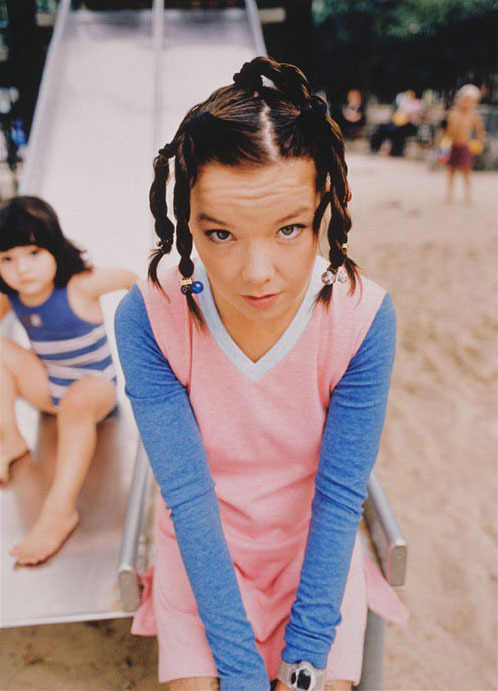
Björk


Sound Familiar?
“Human Behaviour,” “It’s Oh So Quiet,” “All Is Full of Love”

Who Is She?
An Icelandic pixie with a musical style as eclectic as her fashion choices.

Björk’s musical career began at the tender age of 11 in her hometown of Reykjavík, Iceland. One of her piano instructors sent a recording of Björk singing Tina Charles’ “I Love to Love” to the only radio station in Iceland. Once a label rep from Fálkinn Records heard it, he immediately offered our Icelandic darling a record contract and her first* album, Björk, dropped in 1977 (*this album is considered juvenilia, or musical work produced during the artist’s youth, which doesn’t usually see the light of day until after the artist has become well known for later works).

Instead of riding the child prodigy train all the way to the bank, Björk did what most teenagers tend to do: she got angsty and started a punk band. At 14, she formed the all-girl punk band Spit and Snot, then later formed the jazz fusion group Exodus (she was eclectic even as a youngster). Björk graduated music school in 1980 and formed yet another band the following year called Tappi Tíkarrass (which literally means “Cork the Bitch’s Ass” in Icelandic).

In 1986, Björk formed the Icelandic alternative band The Sugarcubes. The band received both critical and popular international acclaim until its disbandment in 1992.

Once The Sugarcubes broke up, Björk moved to London to start a solo career. Her first solo single, “Human Behaviour,” was an international dance hit. Debut, her first (aptly-titled) solo album, was released in 1993 to positive reviews.

Post, released two years later, built on Debut’s dance-pop aesthetic, adding big band and trip-hop sounds. Spin, Rolling Stone and Pitchfork regard the album as one of the best of the ‘90s (and so do I).

In 1997, Björk shifted her image from sweet pixie pop girl to icy abstract queen with Homogenic (this blogger’s favorite Björk album). The album has a conceptual focus on Iceland. Björk reportedly wanted it to sound like “rough volcanoes with soft moss growing all over it.” And you know what? That’s kind of what it sounds like.

(Fun fact: In an interview with Spin, Radiohead’s Thom Yorke professed his undying love for the song “Unravel” from Homogenic. He loved it so much that he made Radiohead do a cover of it.)

Homogenic is also famous for the single “All Is Full of Love” and its accompanying music video, which features two Björk robots getting intimate. This video really doesn’t strike me as odd since it was directed by Chris Cunningham (you know, that guy who directed one of the most frightening music videos of all time).

Where Is She Now?
Still making intriguing musical choices (including an iPad app album).

Björk briefly took a detour into acting in 2000, starring in Lars von Trier’s musical drama Dancer in the Dark. The song “I’ve Seen It All,” performed by Björk and Thom Yorke (or BjörkYorke, if you will), was nominated for an Oscar for Best Original Song.

Her fourth studio album, 2001’s Vespertine, dropped the big beats of its predecessors in favor of a more intimate sound. The lyrics were far more personal, and so were the videos.

The video for "Pagan Poetry" caused a bit of controversy. It featured images of graphic piercings, Björk’s exposed nipples and a simulated blowjob. Even though it was heavily edited by MTV, the video was rarely shown.

(Fun fact: The same year Vespertine was released, Björk showed up to the 73rd Annual Academy Awards in her now infamous swan dress. The garment also appears on the Vespertine album cover.)

In 2004, Björk released an almost entirely vocal-based album called Medúlla. It featured the vocal talents of throat singer Tagaq, beatboxers Rahzel and Dokaka, avant-rocker Mike Patton, Soft Machine drummer/singer Robert Wyatt and a few different choirs. The most radio friendly single, “Triumph of a Heart,” is probably one of best examples of a song entirely dedicated to beatboxing. Also, check out the crazy video.

(Fun fact: Björk performed the song "Oceania" at the Opening Ceremony of the 2004 Summer Olympics in Athens, Greece. During her performance, the dress she was wearing unfurled to reveal a 10,000 square foot map of the world.)

Björk didn’t tour to promote Medúlla. Instead, she went right back to the studio to record Volta, released in 2007. An 18-month tour followed, after which Björk took a few years off to work on the massive project that is Biophilia.

Biophilia, released in 2011, is an album that combines music with technological innovation, science, nature and an iPad. The entire album is a series of interactive iPad apps that represent the scientific and natural ideas behind each song (for example, the app for the song “Virus” is a game where the goal is to stop a destructive relationship between a virus and a cell). Honestly, this isn’t the weirdest thing Björk’s ever done.

(Fun fact: Biophilia was partly composed on an iPad, and features musical instruments specifically designed for the album.)

But Why Björk?
She recently started a Kickstarter campaign to convert the Biophilia iPad apps for use with Android and Windows 8. Why is this important? Well, this is part of an educational project that teaches children all over the world about music and science. Pretty neat, if you ask me.


What Does Sam Think?
I think Björk is a magical being from beyond this earthly realm. How else could she create all this music that sounds like it came from outer space?

But seriously, this woman is so incredibly talented. I do think a lot of her music is an acquired taste, but you have to respect her originality.

When discussing the prominent female figures in music (especially those who “push the envelope”), the conversation usually turns to the Madonna vs. Lady Gaga debate. You can argue about those two all you want. I’m just going to sit here in my comfortable corner and side with Björk. Why? I’ll tell you why.

She’s experimented with so many different genres over the years, yet she’s maintained a signature sound. Her live shows are incredible. She did the weird fashion statement thing prior to Gaga (and better). She doesn’t rely on “sexy girl stereotypes” in her videos or performances. And she’s more interested in creating art than becoming a celebrity caricature. You could probably pair her with PJ Harvey, Fiona Apple and Tori Amos in the category of “Women Who Don’t Give a Fuck.”

So what makes Björk’s music listenable (or unlistenable to some people)? Her first two albums are probably the most accessible since they’re considered dance pop. Homogenic is where she starts to lose some people (perhaps because of the “All Is Full of Love” video). By the time you get to Medúlla, you kind of feel like you’re listening to a weird experiment.

But if you just put aside your preferences for a second, you might find that you really dig all the crazy noises she makes.  


-- Sam Boyer, reporting from the ‘90s.

Wednesday, January 23, 2013

OutKast


Sound Familiar?
“Rosa Parks,” “B.O.B.,” “Ms. Jackson”

Who Are They?
A tour de force hip-hop duo with a lot of funk and just enough soul.

Once upon a time in Atlanta, André “André 3000” Benjamin and Antwan “Big Boi” Patton met at a shopping mall. The two hit it off and started participating in rap battles in their school cafeteria. Eventually, André and Big Boi teamed up and attracted the attention of Organized Noize, a group of local producers. When faced with the dilemma of naming their project, André and Big Boi were torn between 2 Shades Deep and The Misfits. Unfortunately, both names were already taken, so they settled on OutKast.

OutKast, Organized Noize and Goodie Mob joined forces to form the Atlanta music collective Dungeon Family. Once André and Big Boi signed to LaFace records in 1992, they made their first appearance on a remix of TLC’s “What About Your Friends.” A year later, OutKast released its first official single, “Player’s Ball.” The song was a hit and climbed to number one on the Billboard Hot Rap Tracks chart.

The duo released its debut album, Southernplayalisticadillacmuzik, in 1994 and ended up winning a Source Award for Best New Rap Group in 1995.

OutKast’s next two albums, 1996’s ATLiens and 1998’s Aquemini, earned André and Big Boi more recognition in both the East Coast and West Coast hip-hop scenes. Aquemini in particular was considered by The Source to be the duo’s best material to date. Through this record, OutKast was able to explore different sounds, including soul, trip-hop and electro music.

As OutKast’s sound evolved, so did the subject matter. André and Big Boi’s lyrics went from reflecting the lifestyles of pimps and gangsters to discussing the materialism and misogyny of the hip-hop scene. Don’t let those funky beats fool you; these guys rap about some serious shit.

Where Are They Now?
Unfortunately on an indefinite hiatus, but how long could that last?

Although André and Big Boi had released some groundbreaking and politically conscious material in the ‘90s, they had yet to achieve real commercial success. But that changed with the release of 2000’s Stankonia.

Originally titled Sandbox, Stankonia spawned three huge singles (“B.O.B.,” “Ms. Jackson” and “So Fresh, So Clean”) and earned OutKast two Grammys (Best Rap Performance for “Ms. Jackson” and Best Rap Album).

The mainstream appeal continued with 2003’s double album, Speakerboxxx/The Love Below (they called it a double album, but it’s basically just two solo albums released in one neat package).

Big Boi’s Speakerboxxx was mostly a funk/Dirty South party record, while André’s The Love Below mixed hip-hop, funk, jazz, rock, electronic music and R&B. “Hey Ya!” from The Love Below became the most successful single from either album, with Speakerboxxx’s “The Way You Move” coming in a close second. (Fun fact: Both “Hey Ya!” and “The Way You Move” became the first hip-hop songs to be played on adult contemporary radio stations.)

Speakerboxxx/The Love Below has become OutKast’s most successful album to date, going 11 times platinum and earning the dynamic duo a Grammy for Album of the Year.

After that whirlwind of accomplishments, André and Big Boi began working on a joint film called Idlewild, along with an accompanying soundtrack (released in 2006). Though the soundtrack was meant to be a follow-up to Speakerboxxx/The Love Below, Idlewild didn’t nearly the same commercial success. The film, which tells the story of a juke joint in a Depression-era Georgia town, received mixed reviews. The album faired a little better.

In 2007, Big Boi announced plans to release a solo album (and not the kinda-sorta solo album that was Speakerboxxx). Sir Lucious Left Foot: The Son of Chico Dusty was released in 2010 to mass critical acclaim.

André took a break from music for a while to do some acting and launch a clothing line called “Benjamin Bixby” (so damn classy). Eventually, he went back to music to do some guest vocals on various songs and remixes, including Frank Ocean’s “Pink Matter.”

But Why OutKast?
André and Big Boi still secretly work together (see Big Boi’s remix of Frank Ocean’s “Pink Matter”), so new material isn’t entirely out of the question. But we may not see a new OutKast album for a while.


What Does Sam Think?
I was kind of wary about making an OutKast entry because I’ve always associated these guys as an early 2000s group rather than a ‘90s group. But I think that perception of them has to do with commercial appeal. André and Big Boi made great music in the ‘90s, but it didn’t reach a wide enough audience.

So the question becomes, did OutKast sell out?

I’ve never explored the concept of “selling out” with a hip-hop act before simply because I don’t listen to enough hip-hop. I’ll admit that I got into OutKast after hearing “Hey Ya!” and discovering the one and only masterpiece “Ms. Jackson.” Those songs have mass appeal for two slightly different reasons.

“Hey Ya!” is pure pop magic. It’s catchy, it’s danceable and it has one of the most fantastic videos of the 2000s. It’s got to be the greatest song of the 2000s (VH1 got it wrong, but don’t even get me started on that awful list).

Now let’s look at “Ms. Jackson.” It’s still catchy, though not in that “get all the girls on the dance floor” way. It’s a fairly personal song since it deals with André’s relationship with former girlfriend Erykah Badu and her mother, who is the real life “Ms. Jackson.” The animosity between a woman’s mother and her daughter’s boyfriend or husband is relatable, which is one of reasons why this song became so popular.

I’m not saying OutKast songs lost substance after Stankonia. André and Big Boi like to experiment and that’s what makes OutKast such a great project.

So did OutKast sell out? Of course not. Yes, there’s a big difference between Aquemini and Speakerboxxx/The Love Below, but it’s still the same group working with different styles and subject matter.

Bottom line: OutKast is an important part of hip-hop history, and André and Big Boi will no doubt continue to churn out great music, together or separately.


-- Sam Boyer, reporting from the ‘90s.
Wednesday, December 5, 2012

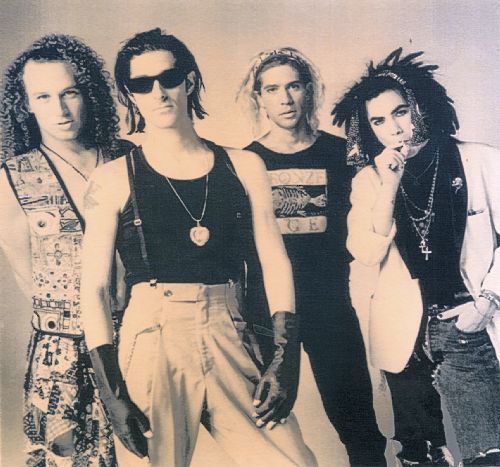
The Offspring


Sound Familiar?
“Come Out and Play,” “Self Esteem,” “Pretty Fly (For a White Guy)”

Who Are They?
One of the bands responsible for reviving mainstream interest in punk in the ‘90s.

Way back in 1983, Bryan “Dexter” Holland and Greg Kriesel decided to form a band after being refused entry to a Social Distortion show. They called themselves Manic Subsidal and eventually picked up Doug Thompson, James Lilja and Kevin “Noodles” Wasserman. (Fun fact: Noodles was a school janitor and quite a bit older than the other guys. Dexter and Greg allegedly let him join the band because he was old enough to buy them alcohol.)

After a small lineup change, the band changed its name to The Offspring in 1986. The boys recorded a few demos, lost a drummer (who went on to pursue a career in gynecology) and signed to Nemesis Records in 1988. The Offspring’s self-titled debut was released in limited numbers in 1989 and a proper CD release didn’t surface until 1995. After a six-week national tour, the band ditched Nemesis Records for Epitaph and released Ignition in 1992.

Ignition exceeded everyone’s expectations and led The Offspring to tour with the likes of Pennywise, No Doubt and Voodoo Glow Skulls.

But these California punk rockers didn’t achieve mainstream success until the release of the aptly-titled Smash in 1994. Thanks to huge singles like “Self Esteem” and “Come Out and Play,” Smash went on 16 million copies, a record for an independent label band.

Since they had a ton of cash to blow at this point, Dexter and Greg created their own label called Nitro Records. The label signed quite a few punk bands, including The Vandals and Guttermouth.

Smash’s follow-up, 1996’s Ixnay on the Hombre, didn’t do as well. The album marked a departure from the band’s signature punk sound with more mainstream rock songs like “All I Want” and “Gone Away.”

The Offspring’s ascension to mainstream status reached critical mass with 1998’s Americana. The album spawned three of the band’s biggest hits to date: “Pretty Fly (For a White Guy),” “Why Don’t You Get a Job?” and “The Kids Aren’t Alright.”

The boys rounded out the decade by appearing at Woodstock '99. (As always, I have included the entire set for your viewing pleasure.)

Where Are They Now?
Riding the success of a brand new album and tour.

The Offspring greeted the new millennium with just a hint of controversy. Conspiracy of One, the band’s sixth studio album, was originally supposed to be online through the official website, but the bigwigs at Sony put a stop to that. The Offspring just wanted to show its support for downloading music on the Internet. What’s so bad about that? (Fun fact: The band sold T-shirts with the Napster logo on them and donated the money to Napster founder Shawn Fanning.)

Drummer Ron Weity split in 2003 and replaced by Josh Freese during the recording of Splinter, then by Adam “Atom” Willard after the album’s release. Splinter’s original title was supposed to be Chinese Democrazy (You Snooze, You Lose), named after the long-delayed Guns N’ Roses album. Axl Rose got wind of this and did what he does best: pitch a bitch fit. He filed a cease and desist order against The Offspring, but took it back once he realized the album’s title was announced on April 1.

After a greatest hits album and an appearance at Warped Tour, The Offspring went on a short hiatus. During this time, Atom left the band to join Tom DeLonge’s pet project Angels & Airwaves.

The band’s eighth studio album, Rise and Fall, Rage and Grace, was released in 2008 to mixed reviews. The second single, “You’re Gonna Go Far, Kid,” landed at number one on the Hot Modern Rock Tracks chart and stayed there for 11 weeks.

The Offspring’s most recent album, 2012’s Days Go By, has also received mixed reviews, with particularly negative ones from Spin and Rolling Stone.

But Why The Offspring?
Along with having a brand new album to tour behind, the band will co-headline the 2013 Soundwave Festival in Australia with Metallica and Linkin Park.


What Does Sam Think?
I love ‘90s pop punk bands and you should, too. They helped bring punk to the mainstream, and no, I don’t consider that a bad thing. It’s accessible music that’s a little jagged around the edges. It doesn’t try to be hardcore or no wave or anarcho-punk. Pop punk is fun, but not “bubblegum pop” fun. Of course, I’m talking early pop punk, not the lame bands you see today (ahem, All Time Low). Green Day, Rancid, Operation Ivy, Social Distortion, The Offspring. These are names you should know.

Now let’s look at The Offspring. This band, along with Green Day, rode the mainstream wave longer than the rest of the scene and doesn’t show signs of stopping. Granted, The Offspring continues to dive into modern rock territory (see the decidedly mediocre Days Go By), but the pop punk roots are still there.

Smash is the band’s best album. Period. It’s a prime example of where punk was going in the ‘90s (see also: Green Day’s Dookie and Rancid’s …And Out Come the Wolves). It’s fast, but not too fast. You can hear the influence from The Ramones, but the songs have a bit more substance. “Self Esteem” remains one of the best Offspring tunes because it’s just so punk rock, man. No, but seriously, that riff is so heavy, sometimes I wonder how it reached all those teenyboppers.

This band is just coasting along now. These guys will always have a loyal fan base, but they really haven’t put out a solid album in a while. Yeah, they’ve passed the point of having to prove themselves to an audience, but come on. The Offspring is capable of so much more than Days Go By.

My advice to this band is to go back underground, experiment a little and come back with a fresh outlook on music. (Same goes for you, Green Day.)


-- Sam Boyer, reporting from the ‘90s.