Since last week’s MTV entry went over so well, I thought I’d
do another larger entry focusing on one aspect of ‘90s music. This week, I’m
going to plunge headfirst into the magic behind your favorite (okay, mostly my favorite) one-hit wonders!

What Is a One-Hit
Wonder?
This may seem like a question with an obvious answer, but
sometimes one-hit wonders get a little complicated. What exactly counts as a
one-hit wonder? The default answer is an artist with only one major hit song.
But some artists categorized as one-hit wonders actually have more than one
hit.
“This is blasphemy!” you shout to no one in particular.
Well, it’s really not blasphemy—it’s just convenient to lump artists with a
similar history into one big category. Plenty of ‘90s artists are one-hit
wonders on a technicality.
So let’s broaden the definition a bit:
One-hit wonder (n.) – 1) an artist with only one Top 40 hit
song; 2) an artist with one hit song that overshadows the rest of their work
Basically, some of the artists I’m going to mention
technically have more than one successful song, but only one of those hits
really defines them (i.e. Toadies had three hits, but most people only remember
“Possum Kingdom,” so they’re a one-hit wonder).
Now that we’ve got that sorted out, let’s talk about some
specific one-hit wonders!
The “Novelty” Hits
I’m using the term “novelty” here quite loosely, as the word
implies a certain level of comedy. I tend to categorize songs that don’t seem
100% serious as novelty songs, and plenty of one-hit wonders fit quite
comfortably into this category.
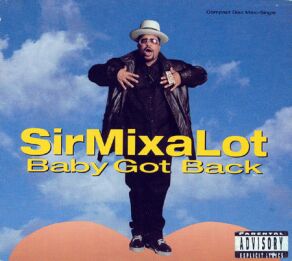
So the “novelty” hits of the ‘90s include Aqua’s “Barbie
Girl,” Sir Mix-a-Lot’s “Baby Got Back,” Right Said Fred’s “I’m Too Sexy” and
Rednex’s “Cotton Eye Joe.” These are typically the one-hit wonders most people
remember because most of them were beyond annoying. Oh, and that also includes Los
Del Rio’s “The Macarena.” But we don’t talk about that. I am actually having
war flashbacks to learning this dance in elementary school. Sweet Jesus, I
fucking hate “The Macarena.”
Anyway, the appeal of these novelty songs lies in both their
infectious hooks and silly subject matter. These are the tunes that get stuck
in your head no matter how much you hate them. Do you remember the first time
you heard “Barbie Girl?” Have you been able to get it out of your head since?
(My guess is no, since the mere mention of it has resulted in you humming the
chorus. COME ON BARBIE LET’S GO PARTY.)
VH1, in all their infinite wisdom, ranked the Top 40 Greatest One-Hit Wonders of the ‘90s a few years ago and placed “Baby Got Back”
at number one. Though VH1 lists tend to piss me off (see their incredibly
disappointing Top 100 Greatest Songs of the 2000s list), I actually think they
got this one right. Based on popularity and cultural relevance, I can agree
that “Baby Got Back” is the best one-hit wonder of the decade. (I’m just really
glad “The Macarena” wasn’t number one.)
“Baby Got Back” was the second best-selling song of 1992
(right behind Whitney Houston’s “I Will Always Love You”). That’s right—a song
celebrating the female posterior was second only to one of the greatest love
songs of all time. And in a way, “Baby Got Back” is also a love song…to an ass.
So yes, I can get behind “Baby Got Back” (pun completely
intended). But not every one-hit wonder is as genuinely fun as Sir Mix-a-Lot’s
masterpiece. “Cotton Eye Joe” by Rednex is perhaps the worst song of the ‘90s.
There are few songs as annoying and pointless as this one. In fact, I’m pretty
sure “Cotton Eye Joe” is on repeat in hell.
In case you were unaware, “Cotton Eye Joe” was written
before the Civil War, though its exact origins are unclear. It started as an
American folk song and ended up as a bizarre dance hit by a Swedish techno
band. Amazing.
The Alternative and
Pop Hits
Not all one-hit wonders are hilariously bad like “Cotton Eye
Joe” and “Barbie Girl.” There are plenty of decent (and beyond decent) one-hit
wonders out there. These include “Tubthumping” by Chumbawamba, “I’m Gonna Be
(500 Miles)” by The Proclaimers, “You Get What You Give” by New Radicals and
“Bitch” by Meredith Brooks.
These hits are also catchy as hell, but tend to find their
way on to “Greatest Songs of the ‘90s” lists rather than “Worst Songs of the
‘90s” lists. Of course, their musical merit is based purely on subjective
opinion, but let’s be honest—if you don’t like “Tubthumping,” you’re wrong. And
if you don’t sing it when you’re drunk off your ass in a karaoke bar, I don’t
want to know you.
Since I’ve already gone into the mass appeal of
“Tubthumping” (see my Chumbawamba entry), let’s look at “You Get What You
Give.”
“You Get What You Give” by New Radicals is a fairly
straight-forward pop rock song with one of the best opening lines of any song:
“Wake up, kids, we’ve got the dreamer’s disease.” It also features some petty
celebrity-dissing, though singer Gregg Alexander claimed that section was a
“test” to see if the media would focus on the dissing or the real issues
addressed in the song. (Spoiler: they just focused on the dissing.)
Meredith Brooks’ “Bitch” is not nearly as pretentious.
Though frequently misattributed to Alanis Morissette, “Bitch” is a solid tune
for a one-hit wonder. Meredith has a lot of talent and it’s a shame so many
people think she’s just an Alanis rip-off. She even got booed off the stage
during a 1998 tour with The Rolling Stones (the booing ultimately became glass
bottles being thrown on stage).
Meredith is currently writing and producing songs for other
artists, along with recording children’s albums.
New Radicals broke up in 1999, but Gregg Alexander has gone
on to write and produce songs for Enrique Iglesias, Geri Haliwell (a.k.a.
Ginger Spice) and Rod Stewart.
One-Hit Wonders Who
Should Have Had More Hits
Having one huge hit is great for some artists—you can live
off the royalties from a song like “Unbelievable” by EMF (which was re-recorded
for an embarrassing Kraft Cheese commercial). But some artists have the talent
for an entire career’s worth of hits. They just don’t have the audience.
While there are tons of ‘90s one-hit wonders that could have
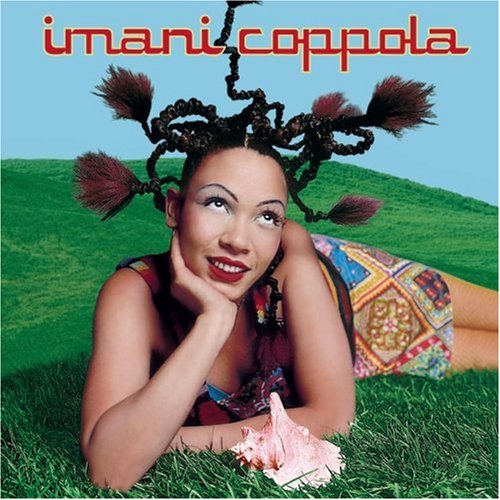
been so much bigger, I’ll focus on three that really strike me: Toadies, Marcy Playground and Imani Coppola.
If you want the full backstory on Toadies and Marcy
Playground, take a look at their artist profiles on this blog. To keep it short
and sweet, those two bands are the most wonderful kind of bizarre.
Toadies have this weird, sludgy post-grunge sound with a
Texas-sized ego. While “Possum Kingdom” is a great tune, the rest of the band’s
catalogue is even better (and so much stranger).
Marcy Playground sounds like an art school kid’s band in the
suburbs. “Sex and Candy” may have been one of the creepiest mainstream songs of
the ‘90s, but it’s got nothing on some of the other songs on the band’s debut
album.
Imani Coppola is a bit different. Known for the song “Legend
of a Cowgirl,” Imani was always destined for bigger. She scored a spot on the
1998 Lilith Fair and teamed up with another one-hit wonder, Baha Men, for a
song called “You All Dat.” By age 22, she was dropped from her major label and
decided to start an independent career and ultimately joined a band called LittleJackie. The band’s most recent album, Made4TV,
was released in 2011.
So is being a one-hit wonder a bad thing? Not at all! Like I
said before, some artists make plenty of money off just one hit song. But
others end up falling short of their potential, mostly because they’re just in
the wrong place at the wrong time. My advice to you is if you like a song that’s
becoming a one-hit wonder, listen to the rest of the artist’s catalogue. You
may be pleasantly surprised.
Unless that band is Baha Men.
-- Sam Boyer,
reporting from the ‘90s.


