Showing posts with label marcy playground. Show all posts

Wednesday, February 26, 2014

What's So Bad About a One-Hit Wonder?

Since last week’s MTV entry went over so well, I thought I’d do another larger entry focusing on one aspect of ‘90s music. This week, I’m going to plunge headfirst into the magic behind your favorite (okay, mostly my favorite) one-hit wonders!

What Is a One-Hit Wonder?
This may seem like a question with an obvious answer, but sometimes one-hit wonders get a little complicated. What exactly counts as a one-hit wonder? The default answer is an artist with only one major hit song. But some artists categorized as one-hit wonders actually have more than one hit.

“This is blasphemy!” you shout to no one in particular. Well, it’s really not blasphemy—it’s just convenient to lump artists with a similar history into one big category. Plenty of ‘90s artists are one-hit wonders on a technicality.

So let’s broaden the definition a bit:

One-hit wonder (n.) 1) an artist with only one Top 40 hit song; 2) an artist with one hit song that overshadows the rest of their work

Basically, some of the artists I’m going to mention technically have more than one successful song, but only one of those hits really defines them (i.e. Toadies had three hits, but most people only remember “Possum Kingdom,” so they’re a one-hit wonder).

Now that we’ve got that sorted out, let’s talk about some specific one-hit wonders!
The “Novelty” Hits
I’m using the term “novelty” here quite loosely, as the word implies a certain level of comedy. I tend to categorize songs that don’t seem 100% serious as novelty songs, and plenty of one-hit wonders fit quite comfortably into this category.

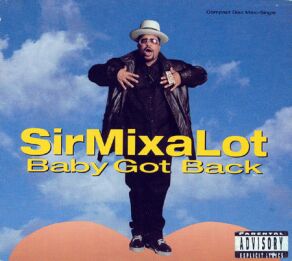
So the “novelty” hits of the ‘90s include Aqua’s “Barbie Girl,” Sir Mix-a-Lot’s “Baby Got Back,” Right Said Fred’s “I’m Too Sexy” and Rednex’s “Cotton Eye Joe.” These are typically the one-hit wonders most people remember because most of them were beyond annoying. Oh, and that also includes Los Del Rio’s “The Macarena.” But we don’t talk about that. I am actually having war flashbacks to learning this dance in elementary school. Sweet Jesus, I fucking hate “The Macarena.”

Anyway, the appeal of these novelty songs lies in both their infectious hooks and silly subject matter. These are the tunes that get stuck in your head no matter how much you hate them. Do you remember the first time you heard “Barbie Girl?” Have you been able to get it out of your head since? (My guess is no, since the mere mention of it has resulted in you humming the chorus. COME ON BARBIE LET’S GO PARTY.)


VH1, in all their infinite wisdom, ranked the Top 40 Greatest One-Hit Wonders of the ‘90s a few years ago and placed “Baby Got Back” at number one. Though VH1 lists tend to piss me off (see their incredibly disappointing Top 100 Greatest Songs of the 2000s list), I actually think they got this one right. Based on popularity and cultural relevance, I can agree that “Baby Got Back” is the best one-hit wonder of the decade. (I’m just really glad “The Macarena” wasn’t number one.)

“Baby Got Back” was the second best-selling song of 1992 (right behind Whitney Houston’s “I Will Always Love You”). That’s right—a song celebrating the female posterior was second only to one of the greatest love songs of all time. And in a way, “Baby Got Back” is also a love song…to an ass.


So yes, I can get behind “Baby Got Back” (pun completely intended). But not every one-hit wonder is as genuinely fun as Sir Mix-a-Lot’s masterpiece. “Cotton Eye Joe” by Rednex is perhaps the worst song of the ‘90s. There are few songs as annoying and pointless as this one. In fact, I’m pretty sure “Cotton Eye Joe” is on repeat in hell.

In case you were unaware, “Cotton Eye Joe” was written before the Civil War, though its exact origins are unclear. It started as an American folk song and ended up as a bizarre dance hit by a Swedish techno band. Amazing.


The Alternative and Pop Hits
Not all one-hit wonders are hilariously bad like “Cotton Eye Joe” and “Barbie Girl.” There are plenty of decent (and beyond decent) one-hit wonders out there. These include “Tubthumping” by Chumbawamba, “I’m Gonna Be (500 Miles)” by The Proclaimers, “You Get What You Give” by New Radicals and “Bitch” by Meredith Brooks.

These hits are also catchy as hell, but tend to find their way on to “Greatest Songs of the ‘90s” lists rather than “Worst Songs of the ‘90s” lists. Of course, their musical merit is based purely on subjective opinion, but let’s be honest—if you don’t like “Tubthumping,” you’re wrong. And if you don’t sing it when you’re drunk off your ass in a karaoke bar, I don’t want to know you.


Since I’ve already gone into the mass appeal of “Tubthumping” (see my Chumbawamba entry), let’s look at “You Get What You Give.”

“You Get What You Give” by New Radicals is a fairly straight-forward pop rock song with one of the best opening lines of any song: “Wake up, kids, we’ve got the dreamer’s disease.” It also features some petty celebrity-dissing, though singer Gregg Alexander claimed that section was a “test” to see if the media would focus on the dissing or the real issues addressed in the song. (Spoiler: they just focused on the dissing.)


Meredith Brooks’ “Bitch” is not nearly as pretentious. Though frequently misattributed to Alanis Morissette, “Bitch” is a solid tune for a one-hit wonder. Meredith has a lot of talent and it’s a shame so many people think she’s just an Alanis rip-off. She even got booed off the stage during a 1998 tour with The Rolling Stones (the booing ultimately became glass bottles being thrown on stage).

Meredith is currently writing and producing songs for other artists, along with recording children’s albums.


New Radicals broke up in 1999, but Gregg Alexander has gone on to write and produce songs for Enrique Iglesias, Geri Haliwell (a.k.a. Ginger Spice) and Rod Stewart.
One-Hit Wonders Who Should Have Had More Hits
Having one huge hit is great for some artists—you can live off the royalties from a song like “Unbelievable” by EMF (which was re-recorded for an embarrassing Kraft Cheese commercial). But some artists have the talent for an entire career’s worth of hits. They just don’t have the audience.

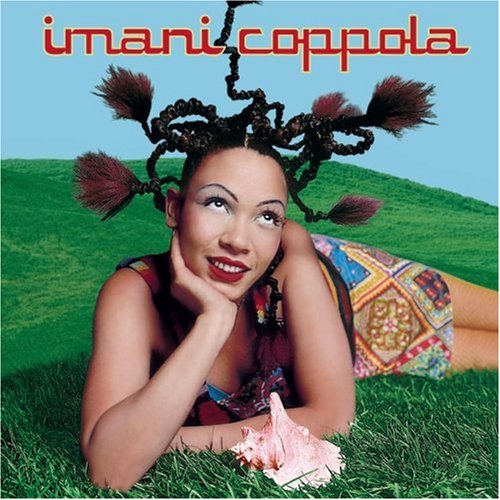
While there are tons of ‘90s one-hit wonders that could have been so much bigger, I’ll focus on three that really strike me: Toadies, Marcy Playground and Imani Coppola.

If you want the full backstory on Toadies and Marcy Playground, take a look at their artist profiles on this blog. To keep it short and sweet, those two bands are the most wonderful kind of bizarre.

Toadies have this weird, sludgy post-grunge sound with a Texas-sized ego. While “Possum Kingdom” is a great tune, the rest of the band’s catalogue is even better (and so much stranger).


Marcy Playground sounds like an art school kid’s band in the suburbs. “Sex and Candy” may have been one of the creepiest mainstream songs of the ‘90s, but it’s got nothing on some of the other songs on the band’s debut album.


Imani Coppola is a bit different. Known for the song “Legend of a Cowgirl,” Imani was always destined for bigger. She scored a spot on the 1998 Lilith Fair and teamed up with another one-hit wonder, Baha Men, for a song called “You All Dat.” By age 22, she was dropped from her major label and decided to start an independent career and ultimately joined a band called LittleJackie. The band’s most recent album, Made4TV, was released in 2011.


So is being a one-hit wonder a bad thing? Not at all! Like I said before, some artists make plenty of money off just one hit song. But others end up falling short of their potential, mostly because they’re just in the wrong place at the wrong time. My advice to you is if you like a song that’s becoming a one-hit wonder, listen to the rest of the artist’s catalogue. You may be pleasantly surprised.

Unless that band is Baha Men.


-- Sam Boyer, reporting from the ‘90s.

Wednesday, November 28, 2012

Marcy Playground


Sound Familiar?
“Sex and Candy”

Who Are They?
Classic ‘90s one-hit-wonders responsible for one of the most frequently asked questions of the decade: “What the hell is disco lemonade?”

Marcy Playground (named after the elementary school front man John Wozniak attended) achieved success early on with its debut self-titled album and this little ditty called “Sex and Candy.” Prior to the band’s formation, John had already recorded an album of his own called Zog BogBean – From the Marcy Playground in 1990. Two songs from that record (“Our Generation” and “The Dog and His Master”) would appear on later Marcy Playground albums.

After attending notable liberal arts school Evergreen State College, John moved to New York and hooked up with his pal Jared Kotler. Once bassist Dylan Keefe joined the band, Marcy Playground began to play shows in NYC and eventually signed to Capitol Records in 1995. Unfortunately, John and Jared couldn’t get past their personal problems, so Jared split and Dan Rieser stepped in just in time to record Marcy Playground in 1997.

The album’s first single, “Poppies,” failed to make a splash, but once “Sex and Candy” hit the radio waves, the band’s popularity skyrocketed. (Fun fact: “Sex and Candy” knocked Oasis’ “Wonderwall” out of the number one spot on Billboard’s Modern Rock Tracks list.)

But what does “Sex and Candy” mean, you ask? Well, according to John, the title is a reference to an evening he spent in his girlfriend’s dorm room when he was 17. The girl’s roommate walked into the room and said, “Oh, it smells like sex and candy in here!” John liked the phrase, so that’s why we have a song called “Sex and Candy.” As for the meaning behind the lyrics, your guess is as good as mine. (But according to Urban Dictionary, “disco lemonade” is actually a tasty cocktail made with vodka and lemonade.)

Marcy Playground released its follow-up, Shapeshifter, in 1999. The album didn’t do nearly as well as its predecessor (hence why the band is considered a one-hit-wonder), and Marcy Playground went on a short hiatus.

(Fun fact: The cover art for Shapeshifter had originally been conceptualized by Paul Leary of Butthole Surfers for the Surfers’ aborted project After the Astronaut. After the artwork was used without permission, Paul was ready to fight. Fortunately for John and company, it was Capitol Records who had stolen the artwork, not the band, so Paul let it go and John had a mini fanboy moment when he realized that a member of Butthole Surfers had designed one of his album covers.)

Where Are They Now?
Touring till death do them part.

After a brief hiatus, Marcy Playground released its third studio album, MP3, in 2004. It didn’t achieve mainstream success, but “Deadly Handsome Man” was featured on the Jay and Silent Bob Strike Back soundtrack and “Punk Rock Superstar” was featured on an XBox 360 playlist.

But the boys remained positive about their future in music, especially on the track “Hotter Than the Sun,” in which John reflects on the band’s short success.

Leaving Wonderland…In a Fit of Rage followed MP3 and Marcy Playground began touring along the California coast.

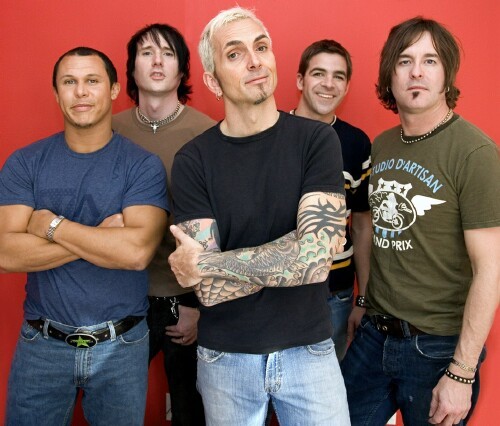
Lunch, Recess & Detention, a collection of rarities, b-sides and new material, new released earlier this year. Marcy Playground spent the summer touring in support of it alongside fellow ‘90s heavyweights Everclear, Sugar Ray, Lit and Gin Blossoms on the Summerland Tour (which I had the privilege of attending).

But Why Marcy Playground?
There’s the album, the tour and the band’s determination to keep touring no matter what. These guys have another album or two in them. Just wait.


What Does Sam Think?
I have a soft spot for most ‘90s one-hit-wonder bands, mostly because a lot of them deserve more than one hit. Marcy Playground is number one on that list.

“Sex and Candy” is one of the best songs of the ‘90s (though it was ranked criminally low on VH1's list). It’s simple, but murky and just plain sexy. The band’s debut album as a whole is pretty quiet and minimalistic, and I think that really works to its advantage. The late ‘90s was chock full of post-grunge bands wanting to be as loud as possible and Marcy Playground was a welcome alternative to that mindset.

Marcy Playground was heavily influenced by bands like Van Morrison and Nirvana, and you can definitely hear that on each album. The band’s music is a little dark, but not the black metal kind of dark; it’s the art school kind of dark.

As far as live performances go, these guys definitely know who their audiences are. They make light of being one-hit-wonders and always, always play “Sex and Candy” at least once (they usually let the audience sing it a few times). Seeing them live actually prompted me to listen to the rest of their discography, which is pretty solid.

So will Marcy Playground come back to rock radio with a vengeance? Probably not. But I think this band has some more secretly great music up its sleeve. And if these boys continue to tour in support of that new music, they will always have a faithful audience.

If you tour, they will come.


-- Sam Boyer, reporting from the ‘90s.

Wednesday, May 23, 2012

Everclear


Sound Familiar?

“Santa Monica,” “I Will Buy You a New Life,” “Father of Mine”

Who Are They?

One of the most radio-friendly alternative bands of the ‘90s.

Singer and guitarist Art Alexakis started Everclear as an escape from his troubled upbringing. Art’s family faced significant financial hardships and was eventually forced to relocate to the slums of Los Angeles. During this time, Art found solace in heavy drug use, which escalated to a near-fatal cocaine overdose.

After that wake up call, Art turned to music. He played in a short-lived band called Shakin’ Brave in the late ‘80s, but eventually got sick of the Los Angeles music scene and moved to San Francisco.

The big thing in San Francisco at that time was this phenomenon called cowpunk. It’s basically a fine mixture of punk rock and county/blues. If you’re a little confused as to how a genre like this could exist, I’ve got two words for you: Social Distortion.

So what did Art do when he discovered cowpunk? Why, he started a cowpunk band, of course.

Not only did Art start a band called Colorfinger, but he also founded his own record label, Shindig Records. Go big or go home, right?

Unfortunately, Shindig Records failed after only one month. On top of that, Colorfinger broke up and Art found out his girlfriend was pregnant. So he and his girlfriend moved to Portland and Art did what most lone musicians do in a new city – he placed an ad in a local newspaper.

The ad earned him two responses: bassist Craig Montoya and drummer Scott Cuthbert. After settling on the name Everclear (after the infamous grain alcohol), Art and the gang recorded their first independently-released album World of Noise in 1993.

The record didn’t sell. Shocking, isn’t it? Art realized his mistake and began searching for a major label deal. Before scoring the big deal, Scott Cuthbert ditched the band and was replaced with Greg Eklund. Gary Gersch signed Everclear to Capitol Records in 1994 and the band released their major label debut, Sparkle and Fade, the following year.

(Does the name Gary Gersch sound familiar to you? It should. He’s the man responsible for signing Nirvana, Sonic Youth and Counting Crows to DGC Records. He’s kind of a big deal.)

Sparkle and Fade initially didn’t find an audience. Though the first single, “Heroin Girl,” received modest airplay on MTV, it was overlooked by the mainstream.

And then “Santa Monica” happened.

Mainstream audiences went gaga over “Santa Monica,” thanks to the budding alternative radio format. Sparkle and Fade achieved platinum status, but the last two singles (“Heartspark Dollarsign” and “You Make Me Feel Like a Whore”) failed to find the same success.

By 1996, Everclear was struggling to come up with a follow-up. They also had to endure the inevitable comparisons to Nirvana, as most alternative ‘90s bands did.

So Much for the Afterglow was released in late 1997 to an initially lukewarm response. The first two singles (“Everything to Everyone” and “I Will Buy You a New Life”) performed modestly, but that was the least of the band’s troubles.

Everclear’s 1998 Australian tour was an utter disaster. Shoes and explosives were thrown onstage (knocking Art’s teeth loose and burning a stagehand) and Craig Montoya’s acoustic bass was stolen. The band has yet to return to Australia, though Art maintains that he has no bad memories of the country. (I wouldn’t want to return to a country whose fans throw lit explosives onstage. Maybe that’s just me.)

Following a US tour with fellow ‘90s favorites Marcy Playground and Fastball, Everclear released So Much for the Afterglow’s most successful single “Father of Mine.”

Where Are They Now?

Still touring and releasing music with a brand new lineup (minus Art).

After the success of So Much for the Afterglow, Art decided to work on some solo material, which eventually turned into another Everclear project. Songs from an American Movie, Vol. 1: Learning How to Smile (released in 2000) was a heavily pop-influenced record with the monstrous hit single “Wonderful.” (Fun fact: “Wonderful” was used as the graduation song for the Columbine High School class of 1999, just months after the Columbine Massacre.)

The band decided to forgo a tour in favor of releasing a second album that same year. Songs from an American Movie, Vol. 2: Good Time for a Bad Attitude ended up being released just four months after Vol. 1, which resulted in some intense confusion. Not only did Vol. 2 come out way too early, but it also had a completely different sound compared to Vol. 1.

The somewhat awkward decision to tour with Matchbox 20 made the situation even worse. When you’re trying to promote a hard rock album, touring with a predominately pop-rock band isn’t the best idea.

Following the release of Slow Motion Daydream in 2003, Craig and Greg had enough of Everclear and left the band, leaving Art as the only original member. Everclear left Capitol Records one year later.

Craig and Greg both formed other bands after parting ways with Everclear. Craig founded Tri-Polar and Greg founded The Oohlas.

Art concentrated on a solo career before handpicking a brand new Everclear lineup consisting of bassist Sam Hudson, guitarist Dave French and drummer Eric Bretl in 2004. After signing to Eleven Seven Music, the “new” Everclear released Welcome to the Drama Club in 2006.

The band has since cycled through several different drummers and traveled to Iraq in support of the troops.

But Why Everclear?

Their first album in six years, Invisible Stars, in set to drop next month! And if that wasn’t enough, Art and company will embark on a huge tour this summer with Sugar Ray, Lit, Marcy Playground and the Gin Blossoms. Is that ‘90s enough for you?


What Does Sam Think?

I will admit that Everclear kind of sounds like most of the other post-Nirvana bands of the ‘90s (they even toured with most of the mainstreamers of the decade). And post-‘90s Everclear is a little too poppy for my liking.

But in its heyday, this band was everywhere, and for good reason.

Listen to anything from Sparkle and Fade or So Much for the Afterglow. The songs may be radio-friendly, but the subject matter is almost as dark as an Alice In Chains record.

As I noted above, Art Alexakis had a pretty rough childhood. While that’s not uncommon for a musician in any genre, it gave Art the ammo to attract a wider audience. He details his struggles with drugs, money and his absent father under the guise of catchy pop tunes. And it’s not like he made the references cryptic. Listen to “Father of Mine.” The lyrics say it all:

Father of mine
Tell me, how do you sleep
With the children you abandoned
And the wife I saw you beat?

The blow may be softened by the upbeat guitar melodies, but the message is clear. I think that’s what made Everclear so popular. They took these deeply personal experiences and put them in an accessible package.

Are they the greatest band of the ‘90s? Not even close. But do they have some great songs? Yes, they do.

The alternative scene in the ‘90s was massive and its influence has spilled over into the new millennium. Yeah, the sound has morphed a bit and become exponentially more mainstream, but maybe we’ll get back to those “low end of the dial” roots someday. Until then, we’ll have to endure another few Maroon 5 records.


-- Sam Boyer, reporting from the ‘90s.