Showing posts with label stone temple pilots. Show all posts

Tuesday, March 18, 2014

Lead Singer Syndrome

Welcome to another special ‘90s entry! This week, we’re going to discuss what many music fans refer to as “lead singer syndrome” (this is not something I made up, I promise). This is a disease that has affected plenty of frontmen (and women) over the years, and it’s not strictly a ‘90s phenomenon. However, there are a number of ‘90s bands that struggled with a temperamental lead singer, and many of them called it quits because of that one person’s sour attitude.

So let’s take a look at three notoriously asshole-ish lead singers (that I also happen to like a lot) and find out just where they went wrong.

Scott Weiland (Stone Temple Pilots)
Status: Fired

Why Is He an Asshole?
His highly publicized substance abuse problems led to multiple arrests, which constantly derailed STP’s attempts to tour and even release new material. Over the years, he became more and more withdrawn from his bandmates and began showing up to his own shows late or not at all (I know from experience because Scott was late to an STP show I attended a few years ago).

After STP went on hiatus in the early 2000s, Scott joined the supergroup Velvet Revolver. Much to no one’s surprise, his bad habits followed him, and Velvet Revolver eventually dumped him. He reunited with both bands later on, but that didn’t last long. Scott got a little cocky about the Velvet Revolver one-off reunion, claiming he was back with the band for good (a claim Slash immediately shot down).

STP went on another hiatus, during which Scott began a solo tour. The tour was branded the “Purple at the Core Tour,” and basically consisted of Scott performing STP songs with another band. The rest of the original STP lineup accused Scott of and essentially touring under the STP brand without permission. They warned him to cease and desist, but Scott refused, so they fired him and replaced him with Linkin Park singer Chester Bennington.

In Scott’s Defense
I made my opinion on Scott Weiland clear in my Stone Temple Pilots entry, but I’d like to go into more detail here.

Like I stated above, I happen to like the three singers discussed in this entry. Out of all three, I like Scott the most (see my embarrassingly intense crush on him in middle school). He’s an incredible songwriter and his voice is heavenly. Though I honestly believe he was a better frontman in Velvet Revolver, his work with Stone Temple Pilots is still impressive.

Unfortunately, his skills as a musician are overshadowed by his rampant drug use in the ‘90s and his increasingly anti-social behavior. For those who don’t know, Scott was diagnosed with bipolar disorder a while back, which explains a lot. Now, of course that shouldn’t be an excuse for some of the bad moves he’s made career-wise—he’s still done some asshole-ish things to his bandmates, both in STP and Velvet Revolver. And I don’t think his admittance of his mental illness was a move to elicit pity from anyone.

His autobiography, Not Dead & Not For Sale, goes into detail about some of his deeper issues (if you’re curious about his life, please give it a read), but ultimately, drugs did him in. Like Kurt Cobain, Scott found solace in heroin, and it obviously fucked a lot of things up for him. I don’t think he’s completely blameless in terms of relationships with his former bandmates, but he’s still a human being who makes mistakes and maybe doesn’t know exactly how to deal with them.

Verdict: 60% asshole (40% misunderstood)


Status: Solo

Why Is She an Asshole?
Her boisterous attitude and tendency to speak before she thinks have gotten her into many scuffles with other musicians (she once punched Bikini Kill’s Kathleen Hanna in the face for supposedly no particular reason).

But perhaps her most prominent claim to infamy was her tumultuous relationship with Kurt Cobain. Because of Kurt’s absurdly exaggerated legacy, Courtney has continuously been viewed as his ultimate downfall. She’s been called everything from a “Yoko Ono” to a murderer.

In Courtney’s Defense
Courtney Love isn’t exactly the easiest person to like, but she has a lot of qualities I really admire.

She challenges mainstream expectations of how a woman should look and act. It seems to me that people who find Courtney’s obnoxious behavior more off-putting than similar behavior from her male counterparts are perhaps caught off guard by her unwillingness to adapt to traditional feminine roles. Or people just find her annoying, regardless of her gender. I can’t assume everyone who hates Courtney is a misogynist.

She also gets far too much shit for her history of substance abuse. Scott Weiland followed almost the exact same path, yet he gets off easy compared to Courtney. But alas, rock ‘n’ roll is a boys club and girls will almost always get the short end of the stick.

But the one thing I really admire about Courtney is her ability to move past the tragedy of Kurt’s passing. No matter what you think of her, you have to admit that being in her shoes at that point in 1994 must have been incredibly difficult. But she prevailed. That takes a hell of a lot of strength.

Sure, she’s made mistakes, and yes, her public image is one of the worst in rock history, but she’s a strong woman (and she probably doesn’t give a shit what you think of her).

Verdict: 75% asshole (25% badass bitch)


Billy Corgan (Smashing Pumpkins)
Status: Only original member left in the band

Why Is He an Asshole?
A notorious perfectionist, Billy insisted on playing all the guitar and bass parts on both Gish and Siamese Dream, which caused early internal drama with the Pumpkins.

The original Smashing Pumpkins lineup began to disintegrate by the late ‘90s, and the band eventually broke up in 2000. Billy reunited with drummer Jimmy Chamberlin to form the band Zwan, but that didn’t last long due to the rift forming between the two.

In 2004, Billy basically ruined any chance of getting the original Smashing Pumpkins lineup back together by badmouthing everyone. He blamed James Iha for the breakup and called D’arcy Wretzky a “mean-spirited drug addict.” And on top of that, he slammed his Zwan bandmates, calling them “filthy, opportunistic and selfish.” (And he did this on LiveJournal, for Christ's sake. LiveJournal.)

Though Jimmy did reunite with Billy for the album Zeitgeist in 2007, he quit two years later. Billy decided to continue releasing music under the Smashing Pumpkins name.

In Billy’s Defense
Like Scott and Courtney, Billy Corgan has his own personal issues that played some part in his behavior. He is apparently obsessive-compulsive, which explains the need for the first two Smashing Pumpkins albums to be perfect (and they are perfect). But that’s still not an excuse to be an asshole about it.

His tendency to badmouth his former bandmates (along with Courtney Love, whom he was involved with for quite some time) is definitely problematic, and unfortunately, I can’t really defend him on that.

My only defense for Billy is his musical skills. The man is a creative genius. Just listen to the perfection that is Siamese Dream. His more recent stuff is okay at best, but he knows exactly what he wants and he makes damn sure everyone hears it.

Verdict: 85% asshole (but 100% musical genius) 

Tuesday, September 10, 2013

Sam's Top 50 Favorite Albums of the '90s (Part 1)

Greetings, my dear readers. If you’re a regular reader of this blog, you’re probably wondering why the format is different this week. Well, it’s because you’re in for a treat. This week, I’ll be starting a countdown series. The first countdown will be my Top 50 Favorite Albums of the ‘90s. Notice that I said “favorite” rather than “best.” These are my personal choices, so I don’t want to hear any cries of, “But why is this album higher than this album?” or, “Where’s this album by my favorite band?” If you don’t see your favorite album on my list, you can always suggest that I listen to it (if I haven’t already).

This list will be updated every other week because I’d like to do some regular entries in between. So next week, you will see another artist spotlight. The week after next, you’ll see the next part of the list, and so on. So sit back and enjoy my fangirlery!

50. Grace by Jeff Buckley (1994)

I need to get something off my chest, guys. Jeff Buckley’s cover of “Hallelujah” is the best version of the song. Period. If you don’t agree, you’re wrong. Sorry, not sorry. That will be my only objective statement on this list, I promise. But I just have strong feelings about that song. The rest of the album is just as gorgeous. Jeff can croon like an angel. His voice just tugs at my heartstrings. I’m not sure if that’s because he was genuinely talented, or if it’s just the mystical feeling of listening to a musician who died too young. I’ve heard the argument that most Jeff Buckley fans tend to glorify his music because of his early death (much like Nirvana fans tend to hold Kurt Cobain up as a “grunge messiah”). But I think Grace holds up as a solid, moving album. With songs like “Lover, You Should’ve Come Over” and of course “Hallelujah,” Jeff knows how to reduce even the most stoic listener to tears.

49. Enter the Wu-Tang (36 Chambers) by Wu-Tang Clan (1993)

I wasn’t really a huge fan of rap until I got to college and started listening to some old school ‘90s rap. A lot of my friends were really into Wu-Tang Clan, so I had to see what the big deal was. Enter the Wu-Tang is probably the rawest rap record I’ve ever heard. There’s no flashy production here—it’s all visceral. I know I’m just a middle class white girl, and I won’t pretend that I can relate to any of the songs on this album. But I can definitely appreciate the beats and the delivery. Enter the Wu-Tang takes no prisoners. The first track, “Bring Da Ruckus,” is basically a call to arms. These guys don’t fuck around and neither does this album.

48. Bridges to Babylon by The Rolling Stones (1997)

I grew up in a Rolling Stones household. My dad is the biggest Stones geek on the planet, so naturally, I’m familiar with the majority of the band’s extensive catalog. While I do appreciate classic Stones, my favorite album is (not surprisingly) their ‘90s release, Bridges to Babylon. These guys kind of took an awkward turn in the ‘80s (accentuated by the Mick Jagger/David Bowie phenomenon that is “Dancing inthe Street”), but by the time the ‘90s rolled around, the Stones got their groove back. This album is exactly like classic Stones, but it’s got enough of the old sound to complement the new sound. “Flip the Switch” and “Gunface” have some great guitar work from the great Keith Richards, and even the slower tunes (especially “Saint of Me”) have a quiet power. There are probably some Rolling Stones purists out there who like to ignore the band’s later work, but Bridges to Babylon can definitely stand up with the greatest Stones albums.

47. Red Medicine by Fugazi (1995)

As if this list wasn’t already all over the place genre-wise, here’s a post-hardcore album to throw into the mix. Punk rock took many forms in the ‘90s: grunge, pop-punk, emo and post-hardcore. Post-hardcore was a little harder for people to swallow, but it’s honestly the most interesting mutation. While I’m sure a lot of Fugazi fans wouldn’t choose this album as their favorite, it was my introduction to the band. I heard “Do You Like Me?” and I was hooked. Those messy, raunchy riffs at the beginning of that track definitely rubbed me the right way. A lot of the other tracks are a bit more experimental, and I think that turns off some of the pop-punk kids, for example. These aren’t three-chord races to the finish line—these songs are meticulous and aggressive.

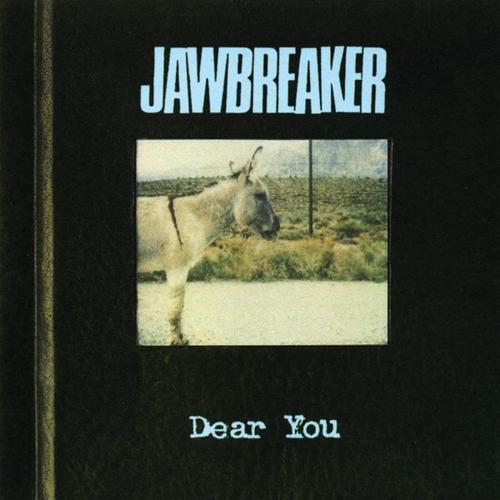
46. Dear You by Jawbreaker (1995)

Speaking of punk rock subgenres, let’s talk about Jawbreaker and emo movement of the early ‘90s. When I say “emo,” the first band that probably comes to mind is My Chemical Romance. Am I right? Yeah, I thought so. Believe it or not, MCR didn’t start the emo movement. It started back in the mid-‘80s and it had nothing to do with eyeliner or vampires or bad haircuts. Though bands like Rites of Spring and Embrace actually pioneered emo (or “emotional hardcore”), Jawbreaker and another band called Sunny Day Real Estate (who also makes an appearance on this list) reinvented it. Jawbreaker was a bit closer to the original emocore sound than Sunny Day Real Estate, though. Dear You is the band’s most polished-sounding album, but that doesn’t lessen the impact of it. My personal favorite track is “Chemistry,” which has this perfect mix of aggressive guitar riffs and a nice, melodic chorus with clever lyrics.

45. Tragic Kingdom by No Doubt (1995)

If you read my entry on No Doubt, you’ll recall that I’m in love with Gwen Stefani. Tragic Kingdom-era Gwen is the best Gwen because she was just so spunky. And yes, I do realize there are other people in the band, so let’s just talk about Tragic Kingdom in a musical sense. Again, looking back to my No Doubt entry, it’s pretty obvious that I love this album. It’s one of the most inventive albums from the third wave ska movement because it incorporates more than just swing-style beats and a trumpet/trombone chorus. “Don’t Speak,” for example, is a gorgeous ballad that you wouldn’t normally hear on a ska album. There’s even a Spanish-style guitar solo. Beat that, Reel Big Fish.

44. Hello Nasty by Beastie Boys (1998)

I know most people would choose Ill Communication over Hello Nasty, but I’m not most people. This is my favorite Beastie Boys album because it features some of the best Beastie Boys songs. “Intergalactic,” “Electrify,” “Super Disco Breakin’”—these are fantastic tunes. When I was younger, I would attempt to dance to “Body Movin’” and my parents would laugh at me, but dammit, I loved that shit. If you get me drunk enough, I will dance to every single song, and I will do those horribly embarrassing moves that I probably shouldn’t do in public. The Beasties bring out the best in me, you know? And God rest MCA’s soul. That man helped create some awesome music and I still upset when I realize he’s gone. But we still have albums like Hello Nasty to remind us that the spirit of the Beastie Boys will never die.

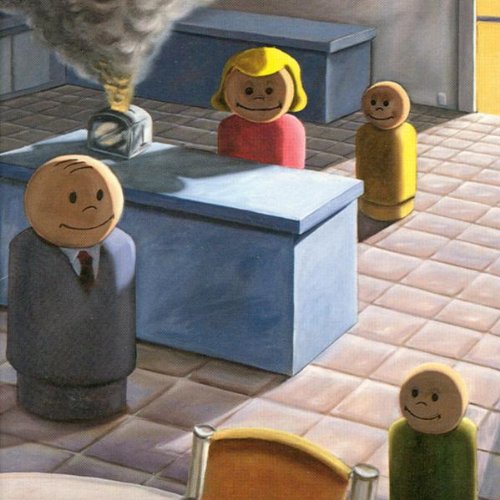
43. Diary by Sunny Day Real Estate (1994)

Oh hey, remember when I said you’d be seeing Sunny Day Real Estate on this list? Didn’t think you’d see them so soon, huh? Like Jawbreaker, these guys reinvented emo in the early ‘90s. Diary was the band’s first (and probably most successful) album. There’s something urgent in its tone and the sound helps bridge the gap between post-hardcore and the later forms of emo. It’s powerful (even if you can’t understand most of Jeremy Enigk’s lyrics). Some personal highlights include “The Blankets Were the Stairs,” “In Circles” and “Pheurton Skeurto.”

42. Purple by Stone Temple Pilots (1994)

This band gets a lot of shit, but they made some damn good music back in the day. I’ll admit that STP’s first album, 1992’s Core, was kind of a grunge rip-off, but Purple, the second album, was so much better. The band incorporated some psychedelic rock influences and Scott Weiland’s lyrics and vocal delivery vastly improved. Purple also had three perfect singles: “Vasoline,” “Interstate Love Song” and “Big Empty.” I still believe “Interstate Love Song” is one of the best songs of the ‘90s because of its simplicity. It has a Southern rock feel to it, but there’s a pop undertone there that makes it so much more accessible. STP wasn’t a grunge band by any means and I think most people would agree with me. Scott Weiland and company were vastly more creative than their contemporaries. It’s a shame that Scott and the rest of the band went their separate ways (but I can always hope for a reunion).

41. Siamese Dream by Smashing Pumpkins (1993)

This album was tough to place on the list because on one hand, it’s technically perfect. On the other hand, there is one SmashingPumpkins album that I love way more than this one. But let’s concentrate on this one. Siamese Dream is the definition of a flawless album. I seriously struggle to find anything wrong with it (though I do know too many people who hate “Today,” but whatever—I like it). Billy Corgan was obsessed with making this a great album, so much so that he often overdubbed James Iha and D’arcy Wretzky’s guitar and bass parts with his own playing. But the result was a record that felt so incredibly massive, yet so controlled. “Geek U.S.A.,” along with being my second favorite Smashing Pumpkins song ever, is the perfect example of this sentiment. It condenses a three-part epic into five glorious minutes. And that’s what Siamese Dream is—a glorious epic. 

Wednesday, March 13, 2013

Stone Temple Pilots


Sound Familiar?
“Plush,” “Interstate Love Song,” “Trippin’ on a Hole in a Paper Heart”

Who Are They?
Alternative radio mainstays and supposed grunge imposters.

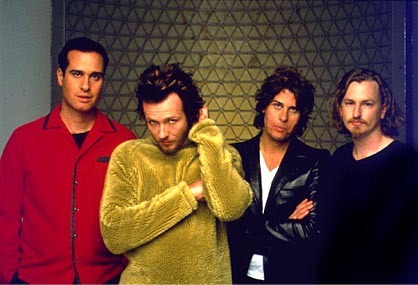
As with most of the history of Stone Temple Pilots, there are two sides to the story of how Scott Weiland and bassist Robert DeLeo met: the band’s side and Scott’s side. The band said that Scott and Robert met at a Black Flag concert in 1986. The two began discussing their girlfriends, only to find out that they were dating the same woman. Instead of beating the shit out of each other in a jealous rage, the two developed a bond and decided to start a rock band (they broke it off with the girl shortly after).

Scott’s side of the story (as detailed in his autobiography, Not Dead and Not For Sale) was that he and his high school friend, Corey Hicock, pursued Robert after seeing him play live.

Personally, I prefer the band’s story (but I still love you, Mr. Weiland).

Scott, Robert, Corey and a drummer named David Allin formed a band called Swing, but after Corey and David ditched them, they grabbed drummer Eric Kretz and guitarist Dean DeLeo (Robert’s older brother). Dean flat out refused to be in a band called Swing, so the name changed to Mighty Joe Young.

The band recorded a demo tape in 1990 and played its first show supporting Henry Rollins. During the recording of the debut album, Scott and company got a call from a bluesman who claimed the name Mighty Joe Young.

In a scramble to find a new name, the band threw around various spins on the initials STP (inspired by the STP Motor Oil stickers). After briefly considering the name Shirley Temple’s Pussy, they settled on Stone Temple Pilots (thank God for that).

Stone Temple Pilots signed to Atlantic Records in 1992 and released their debut album, Core, the same year. Core was a huge success, but most critics accused the band of being “grunge imitators.”

Critics may have hated them, but STP still gained a loyal fan base. The band toured extensively with Rage Against the Machine and Megadeth and filmed an episode of MTV Unplugged.

(Fun fact: In a January 1994 Rolling Stone poll, STP was voted Best New Band by readers and Worst New Band by the magazine’s critics. Talk about discrepancy.)

Despite the critical backlash, STP won a Grammy for Best Hard Rock Performance for “Plush” and released the hugely popular Purple in 1994.

“Interstate Love Song” became the album’s biggest hit, topping the Mainstream Rock Tracks chart for 15 weeks.

Meanwhile, Scott was developing a serious heroin addiction. By the time STP’s third album, 1996’s Tiny Music…Songs from the Vatican Gift Shop, dropped, most of the tour had to be canceled due to Scott’s drug abuse. As a result, Tiny Music fell off the charts and STP’s popularity began to wane.

The band went on hiatus soon after the album’s release. During this time, Scott released a solo album (12 Bar Blues) and the rest of the band teamed up with Ten Inch Men front man Dave Coutts to perform as Talk Show.

STP regrouped in 1998 to record No. 4, released a year later.

Where Are They Now?
Still technically together, sans Scott Weiland (maybe?). We’ll get into that later.

STP’s success came roaring back with a little help from No. 4’s biggest single (and my favorite song), “Sour Girl.” (I highly recommend watching the super strange and oddly sexy music video.)

In 2001, the band released Shangri-La Dee Da, which ended up being a commercial disappointment. After an altercation between Scott and Dean on the final show of the Shangri-La Dee Da tour, Stone Temple Pilots officially disbanded.

Scott joined the ultra-cool supergroup Velvet Revolver in 2003, which consisted of former Guns N’ Roses members Slash, Matt Sorum and Duff McKagan, along with former Wasted Youth guitarist Dave Kushner. Velvet Revolver released two albums, 2004’s Contraband and 2007’s Libertad, before Scott officially left the band in 2008.

Stone Temple Pilots eventually reunited in 2008 after Scott and the DeLeo brothers settled their differences. The reunion tour officially kicked off at Rock on the Range in Columbus, Ohio the same year (I unfortunately didn’t get to witness that miracle firsthand).

After the release of a self-titled sixth studio album, things began to go sour again. Hopes for a 20th anniversary celebration for Core were dashed in 2012, and Scott was already looking to reunite with Velvet Revolver (which Slash immediately declined).

But Why Stone Temple Pilots?
As of February 27, 2013, Scott Weiland is no longer part of the band. Or maybe he is. I’m not quite sure at this point. Scott recently told TMZ, “STP is not broken up. It’s a whole thing to try to boost ticket sales.” And apparently he learned of his termination through the band’s official website, not directly from any other members. So is this for real, or is it really just a marketing ploy? It may be one of the great mysteries of the world.


What Does Sam Think?
Story time! Back in middle school, I was obsessed with Velvet Revolver (and I also had an embarrassingly huge crush on Scott Weiland, but that’s beside the point). Through Velvet Revolver, I became interested in Stone Temple Pilots. I had heard “Interstate Love Song” and “Plush” before, but I didn’t think of delving into the band’s discography until the formation of VR.

I know some people dislike this band for a variety of reasons. Some say these guys are “grunge wannabes” since their debut came out a year after Nirvana, Soundgarden, Alice In Chains and Pearl Jam’s breakthrough albums. And although Core does have a grungy feel to it, STP evolved past it. There’s a vast difference between Core and Purple, and an even bigger difference between Purple and No. 4. The band kind of adapted a more psychedelic sound in later albums, with a pinch of Southern rock influence (especially on “Interstate Love Song”).

But most people I know who dislike STP cite Scott Weiland as the weak link. I know I’m biased when I say this, but Scott is incredibly talented, and I think people look past that talent and concentrate on Scott’s drug abuse. His drug and legal escapades should not define him as a musician. I’ve read his autobiography (and you should, too) and I’ve come to realize that he’s a pretty troubled guy. You really can’t hold that against him.

So if you don’t like STP (which is perfectly okay), I hope it’s because of the music and not the man behind it.


--Sam Boyer, reporting from the ‘90s